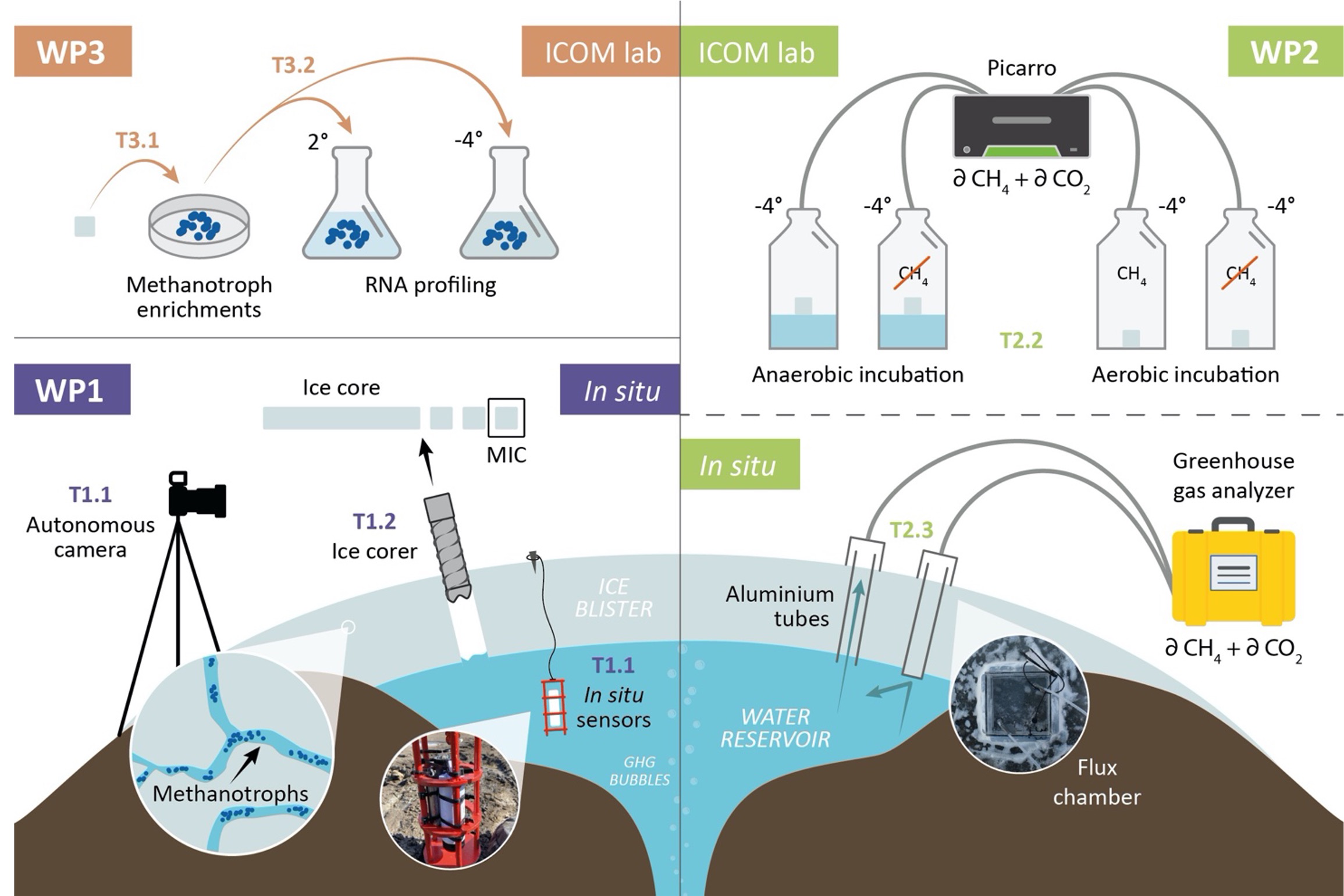
Evaluate ability of microbial community to use ice-trapped greenhouse gasses
Micro ice cube (MIC) incubation experiments to explore how the ice blister microbial community uses methane and terminal electron acceptors (TEAs)
Field ice core experiment evaluating if the ice microbe community is more influenced by the sub-ice reservoir or compounds that are trapped within the ice during formation
Furthers understanding of polar methane budgets, and the potential implications of climate change on these ice blister environments
Establishes micro ice cube experiment method, creating potential for other site applications
Develops sampling techniques that can be implemented on upcoming missions exploring our solar system’s icy moons, eg. NASA’s lander expedition to Jupiter’s Europa