
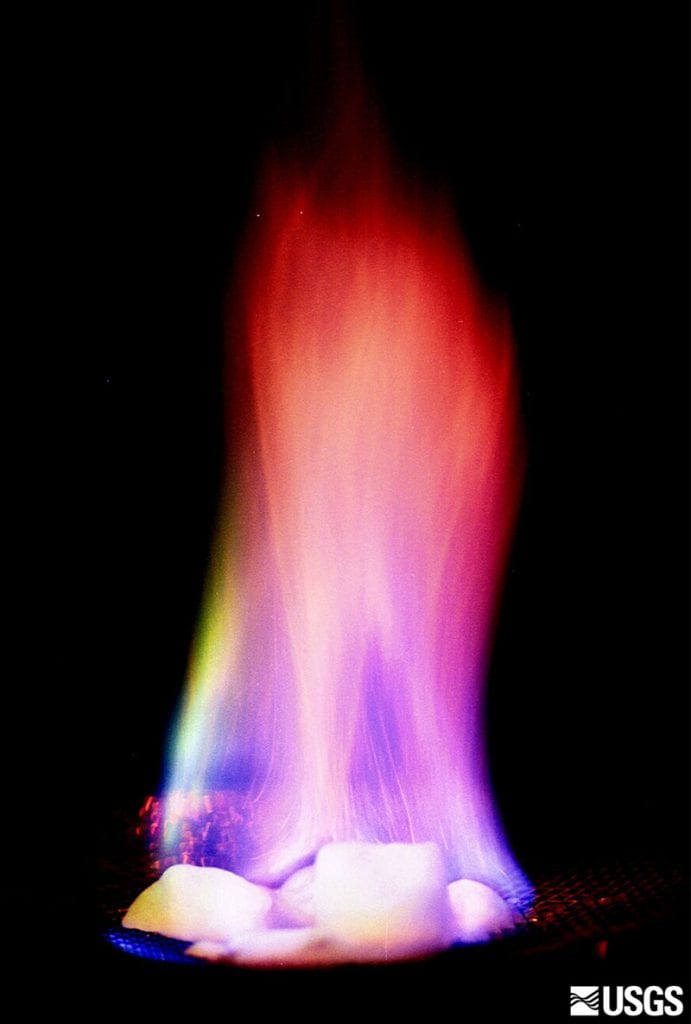
That is one of the questions that COST Action MIGRATE is trying to answer. Stefan Bünz was recently elected as Vice Chair of the action, supported by EUs framework program.
By: Maja Sojtaric
In Europe, as elsewhere, demand for natural gas is continuously increasing.
Gas hydrate accumulations in continental shelf sediments are considered a promising resource for future gas supply by several non-European countries, such as USA, Japan, China, India, South Korea, and Taiwan. In 2013, the Research Consortium for Methane Hydrate Resources in Japan produced gas during a successful offshore field test.

Recently a European Concerted Research Action (COST) designated to marine gas hydrates was established. Stefan Bünz, associate professor at CAGE, was elected the Vice Chair of the action.
Marine gas hydrate – an indigenous resource of natural gas for Europe (MIGRATE) will examine the potential of gas hydrates as an economically feasible and environmentally sound energy resource.
Significant contribution from CAGE

In particular, MIGRATE aims to determine the European potential inventory of exploitable gas hydrates, to assess current technologies for their production, and to evaluate the associated risks.
“With the wide spectrum of gas hydrate research undertaken in CAGE, we will significantly contribute to three of the working groups in MIGRATE: resource assessment; exploration, production and monitoring technologies; and environmental and geohazard challenges. “ says Bünz.
CAGE will particularly contribute with a large seismic database from the Norwegian and Arctic margins and development of seismic-based technologies.
The European Concerted Research Action (COST) is networking instrument for cooperation between researchers, engineers and scholars to coordinate nationally funded research activities.