
The GLOSS team, with five partner institutions from Norway, presented our preliminary result from the “Long-term Effects of International Practicum for Student Teachers” at ATEE Spring conference. In our research we are interested in long term effects of student mobility through qualitative semistructured interviews with teachers with minimum of five years teaching practice after their study and teaching practice abroad. Researchers from all five Universities have developed joint key questions and conducted interviews with at least five teachers each.
Gerd Wikan from Inland Norway University of Applied Sciences thoughts on global teachers and practicum in the global south emphasis that teacher education must teach student about both developmental issues and multicultural contexts to be qualified as teachers to work in a multicultural context. Wikan presented long term effects of an international practicum programme in Namibia for Norwegian student teachers. The aim of the programme was to expose students to diversity and to develop their global and intercultural competences. They especially address issues such personal and professional growth, gaining a global perspective and intercultural competence. The case study is based on qualitative data gathered from 7 former student teachers who had a 3 month practicum period in Namibia and are presently working as schoolteachers. On the personal level, we found increased self-esteem, greater interest in international affairs, and increased competence as a teacher in diverse classrooms. On the professional level, we found an impact on curricular and instructional practices such as focus on global and multicultural aspects.
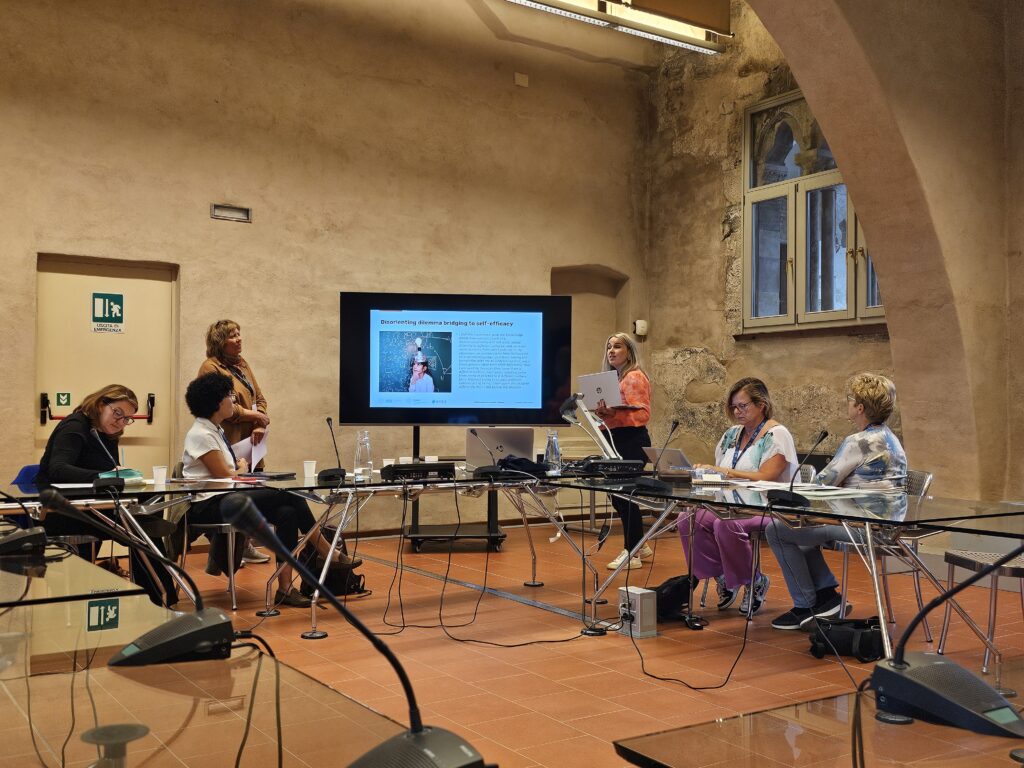
Annfrid Rosøy Steele and Tove Leming from the Artic university asked how does international practicum during teacher education affect the professional role as a teacher? Would this experience give new perspectives and practices in the classroom, and will this kind of experience in the training give students expanded competence about global teaching and diversity? By interviewing former students who have worked as teacher’s minimum 5 years in North Norwegian schools. The teacher engages in activities and interprets the results of their actions and then uses these interpretations to create and develop beliefs about their capability to engage in similar domains. In this presentation, they discuss and present findings in two of the scoops, the impact of global understanding in the teacher’s professional practice, and their professional development as teachers. Steele and Leming find that students who attain international practice develop beliefs about their capabilities as teachers on a professional and personal level, which help them determine what they can do with the knowledge and skills they have achieved and can achieve in their profession.
Jørgen Klein, Ann Sylvi Larsen and Grete Tove Lie from the Norwegian University of Science and Technology gave a presentation entitled; “It is all about how you portray a culture that is not your own, how we talk about us and them”. They have interviewed Norwegian teachers that had an international experience in Zambia during their teacher training, five to ten years back in time. We wanted to investigate the possible long-term impacts of an international practicum, and whether it had any lasting effects on teacher identity, professionalism and global awareness. Overall, the teachers emphasized personal growth and professional development as main outputs. Instead of focusing on the differences between the home culture and the culture abroad, the participants tended to focus more on the similarities between people from the global North and the global South.
Ane Bergersen from Western Norway of Applied Sciences focus upon professional teaching and global awareness in her presentation. At Western Norway University of Applied Sciences, teacher students have since 2008 had the privilege of studying global knowledge, a 30 ECTS subject, as part of their teacher education. The subject consists of theories and practical preparations before a three-month stay in Zambia, including teaching practice and fieldwork. How do these five Norwegian teachers describe their professional development and global perspectives as teachers many years after a three- month stay in Zambia as part of the subject Global Knowledge? Bergersen ask. Some of the preliminary key findings are intercultural communication skills, awareness of Norwegian values and norms, social justice, and global awareness.
Hege Knudsmoen and Mette Birgitte Helleve from Oslo Metropolitan University emphasize how practical placement in the global South is increasing in primary and secondary teaching education in Norway. Therefore, encouraging these experiences of practicum in the global south after they transition to professional teachers is a crucial injury. Five Norwegian teachers describe their professional development and global perspectives as teachers many years after a three- month stay South- Africa and Uganda. They ask how experienced teachers perceive the relevance of their international practicum experiences in shaping their profession as teachers. Through an abductive analysis of the material, the study underscores the significance of teachers’ prior international experiences in their professional and personal lives. The teachers’ global consciousness is based upon their experience of cross-cultural practicum, where they reflect upon their professional growth.
Links:
ATEE – Association for Teacher Education in Europe