Project 3: Anticipation and Interference during Sentence Processing in Russian Heritage Speakers
1.1 WHAT IS OUR GOAL?
The aims of this project are to explore:
- the levels at which Heritage Speakers (HSs) truly differ;
- the role of the (lack of) heritage language literacy in explaining (some) observed heritage speakers outcomes.
We will approach these big picture questions by exploring different aspects of sentence processing, specifically anticipation and interference, as well as the knowledge of grammatical gender and its deployment during processing in heritage speakers of Russian as a function of individual differences in language experience (including literacy) and cognitive control.
1.2 WHICH HERITAGE LANGUAGE COMMUNITY ARE WE TARGETING?
Heritage and L2 speakers of Russian living in the United States with varying degrees of proficiency, on a continuum from fluent speakers to overhearers. Testing this latter population will also contribute to tackling the question of whether prediction involves production.
1.3 WHICH ASPECT(S) OF PROCESSING AND LANGUAGE?
Processing
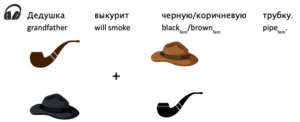
- Anticipation: do HSs predict the target object based on the semantic constraints of the verb?
- Lexical Interference: are HSs subject to lexical interferences in a bottom-up manner (upon hearing a lexical item which is locally but not globally coherent)?
Language
- Grammatical gender: do HSs use grammatical gender as an additional cue to minimize the effects of lexical interference?
1.4 HOW ARE WE GOING TO COLLECT DATA?
Capitalizing on on-line eye-tracking implemented with web.gazer and Gorilla as well as recruitment platforms such as Prolific and Yandex.Toloka provides opportunities for reaching out to multiple populations of language users, including native speakers of Russian in Russia and second language learners and heritage speakers of Russian in the United States.