
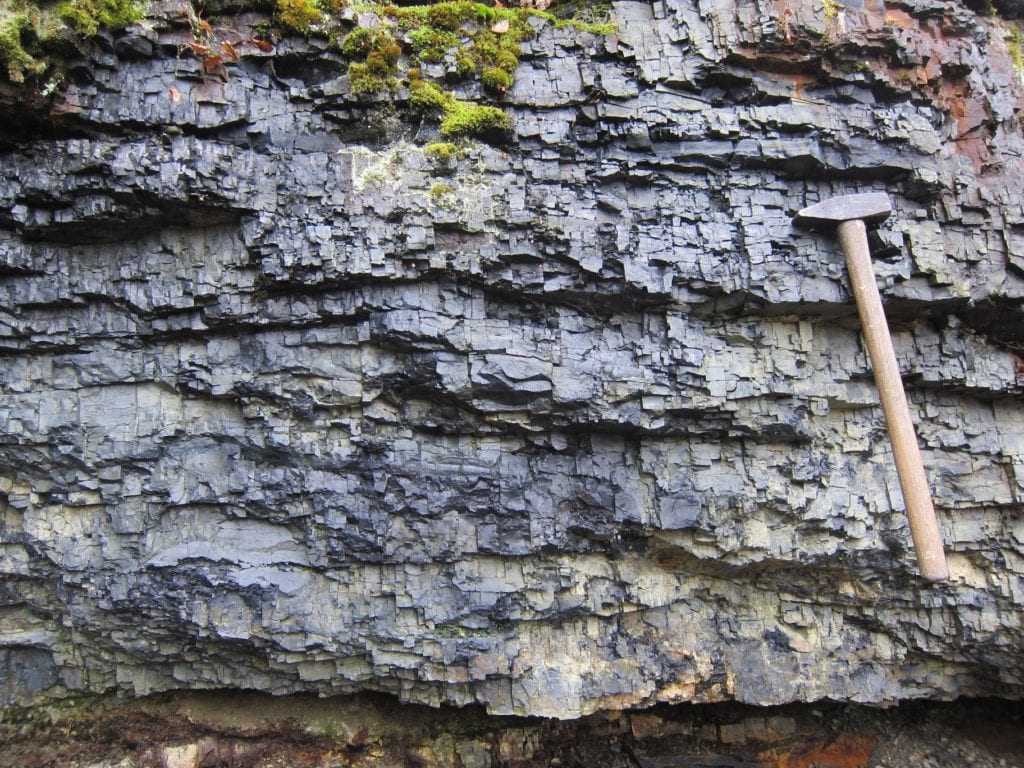
This is shungite, a unique carbon-rich sedimentary rock from Russia that deposited 2 billion years ago. It holds clues about oxygen concentrations on Earth’s surface at that time. According to a new study in Nature Geoscience, with participation from CAGE, there were elevated levels of oxygen at the time when the shungite was deposited.
This contradicts the widely-accepted models of Earth’s carbon and oxygen cycles, which predict that shungite should have been deposited at a time of rapid decrease in oxygen levels.
Why is this important?: “These new findings are also crucial for understanding the evolution of complex life.” according to this article in Eurekalert.org.
Geology. Pretty awesome.
Photo: Aivo Lepland, NGU/CAGE.