On 13–14 October 2025, the GLOBSEC Cyber Lab once again brought together students from Norway and South Africa for a two-day, high-pressure strategic exercise. This year, for the first time, a team from Durban University of Technology also joined the challenge — an exciting expansion that grew out of last year’s collaboration.
Organised by the Cyber Security Institute as part of the GLOBSEC project, the Cyber Lab is a non-technical, policy-level incident response simulation. It immerses students in realistic crisis scenarios where they must think like national security advisors, balancing competing priorities and limited information.
This year’s scenario opened in a world on the brink of chaos:
“The year is 2026 and the world is in great turmoil. War appears to be brewing between the great powers of the Pacific… African countries are also attempting to remain neutral, but this is difficult due to competition between the great powers for Africa’s critical minerals required for the microchip industry.”
Over two intense days, teams of students worked late into the night developing high-level policy recommendations for government leaders. They assessed threats, mapped consequences, and presented three viable response options — weighing national interest, global stability, and moral responsibility.
Each team faced two escalating crisis scenarios, forcing them to adapt under time pressure and justify their decisions before a panel of expert judges.
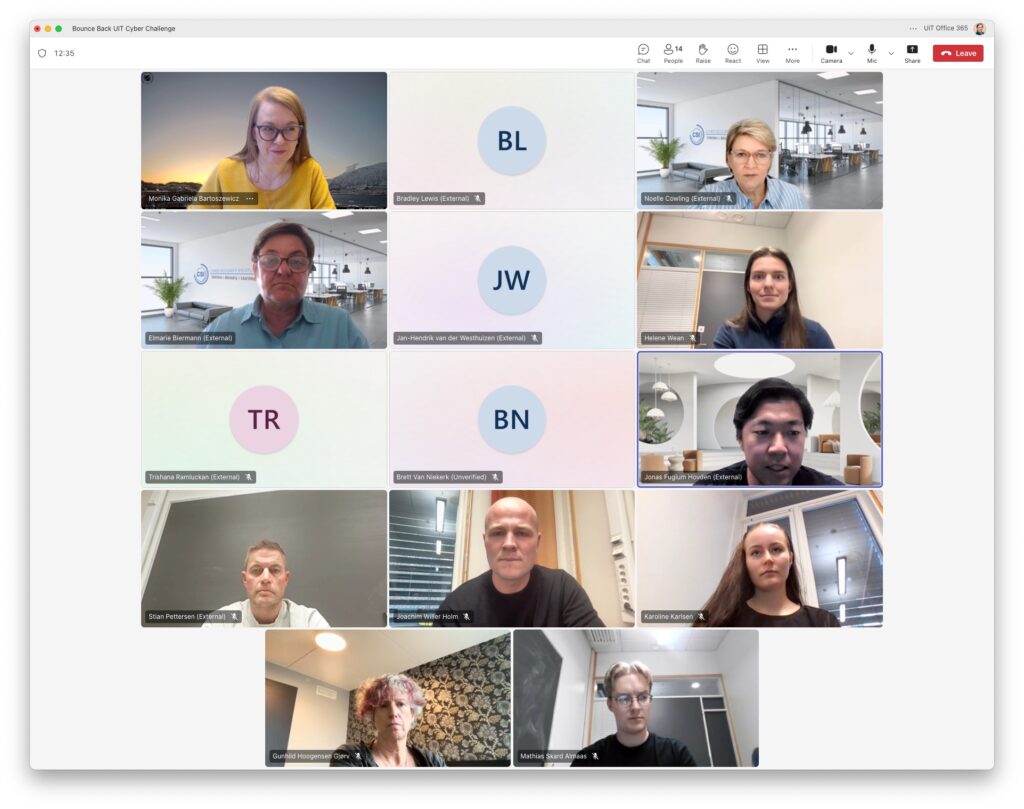
🏆 The winning team, The Bounce Backs (UiT), impressed the judges with their sophisticated understanding of trade-offs, scenario logic, and the clarity of their policy reasoning. Their presentation demonstrated how thoughtful collaboration and strategic foresight can turn uncertainty into opportunity.
This year’s Cyber Lab reaffirmed what GLOBSEC stands for: learning through challenge, cooperation across continents, and the belief that the best way to prepare for crises is to think together — before they happen.