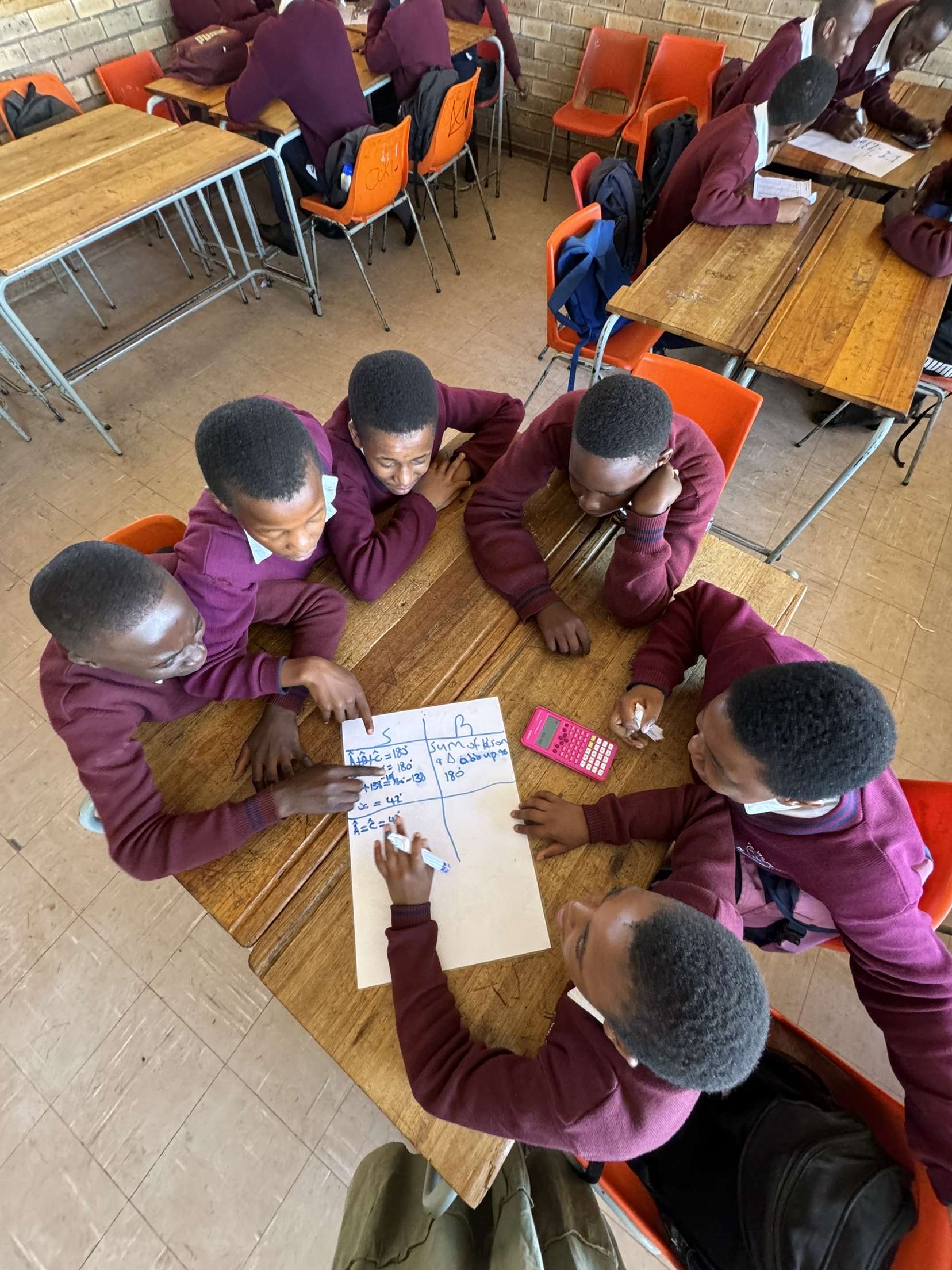
This week has been a bit chaotic. The week started with a lot of rain on Monday and Tuesday. It rained way more than what is normal this time of year, and several roads were flooded. Consequently, the school was closed on Tuesday, since several of the learners were not able to get to school. The school yard was flooded with water. Several of the classrooms that were missing some windows, had rain coming in, so there has been a lot of work this week to clean up all the water from the floors. The roof even collapsed in one of the classrooms because of the heavy rain.
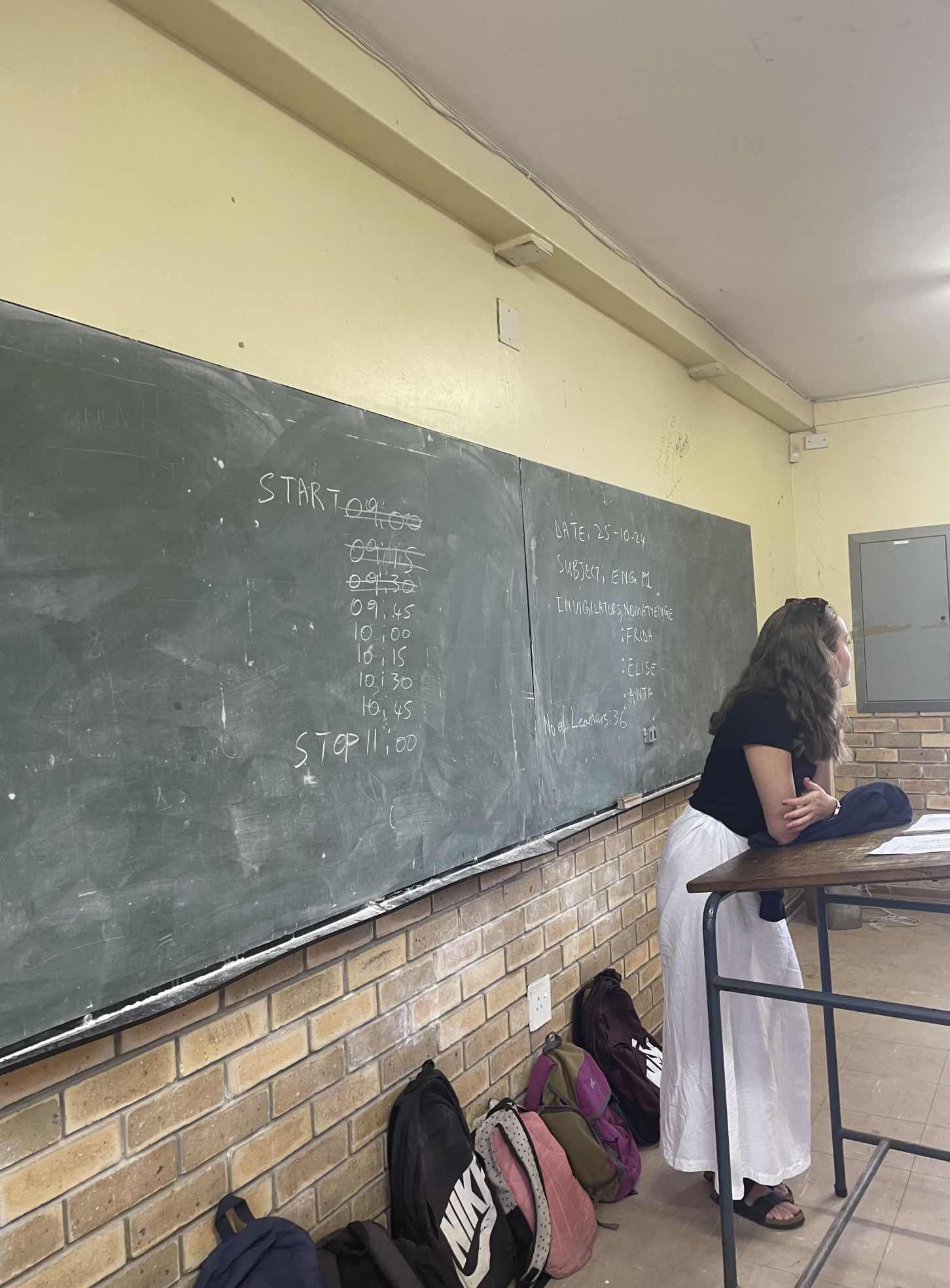
The rest of the week has been quite busy for the learners and teachers. The examinations have started for some grades, so this week there has been few normal lessons. Since we took the invigilator course last Thursday, we were allowed to invigilate some of the exams (with another teacher present, of course). It was very interesting to see how the exams are conducted here compared to Norway. The exams last about two or three hours here, compared to Norway where they last five or six hours. However, they have more exams than the learners back home. In some subjects, they have up to three exams! As a result, many learners have been quite stressed this week. Some have had up to two exams on the same day.
On Friday, we were invited by the kitchen staff to taste the food the learners are served at school. The meals vary from day to day. That day, the learners were served Umvubo (African salad), which is a mix of maize flour, water, and sour milk. Sometimes, they sprinkle a bit of sugar on top. It reminded us of the traditional, Norwegian sour milk porridge, but with lumps. In the school kitchen, they prepare food for around 1,000 learners each day, so we can only imagine how much work is required. The ladies in the kitchen were very kind and invited us to try more dishes next week.
The agriculture class also organized a vegetable market in the schoolyard, featuring vegetables they had grown in the school garden. For now, it’s mostly teachers and parents who buy the vegetables, but the agriculture teacher has a goal of reaching more people over time.
On Friday afternoon, we were invited by the principal to join a football match at Isaac Wolfson Stadium. The junior women’s national team played, Banyana banyana. It was very exciting, especially since one of the students plays on the team. She is in the 11th grade at Vulumzi and went straight from her exam that day to the football match to play.
Friday ended with a nice meal at The Coachman with the group from Machiu. We ate ostrich, which tasted very good! Now we are looking forward to a well-deserved weekend. Tomorrow, we are heading to Jeffrey’s Bay, which is about an hour’s drive from Gqeberha, where we have signed up for a surfing course. It’s going to be fun!
In this blog we are also reflecting upon the teaching practice at Vulumzi SSS and schools back in Norway. This week we will have a short reflection in what ways the classroom management/pedagogical leadership is different or similar compared to back home, as well as in what ways learners have influence. Based on what we have observed while we’ve been here, the teacher has a very central role in the classroom. In many cases, one could say that the teacher has a more authoritarian role than the authoritative role which we are used to in Norway. It is usually the teacher who makes decisions, and we have observed a low degree of student influence in most of the classes.
However, in subjects such as Life orientation, the learners have more influence in the lesson activities, as well as a more active role. However, it is very apparent to us that the Vulumzi teachers care a lot about their learners and wants them to succeed both at exams and life in general. Thus, the focus on relational competence seems to be important at Vulumzi SSS, but it shows in different ways. We have observed some favouritism of high achieving learners. It is very interesting for us to gain more knowledge of a different approach to classroom management and relationship building. We are learning a lot.
Ubene mpelaveki emnandi 🙂
– Anja, Elise, Maria, Amalie and Frida