
Sammendrag
Nils Henrik Simonsen performed a two months long internship at the University of Johannesburg, South Africa.

Hello, my name is Nils Henrik, and I’ve just finished my bachelor’s degree in geoscience. I had the pleasure of spending my summer of 2025 in Johannesburg, where I completed a research internship at the University of Johannesburg (UJ), focused on geochronology in an unusual area near the small town of Balfour.
The area is sometimes referred to as “The Vaalrand Enigma”, since its geological context has long been uncertain. To help solve this puzzle, my supervisors, Marlina Elbourg and Michiel de Kock, set out to date the rocks from a hillside known as Vaalrand. Determining their age would allow us to understand what these rocks correspond to and whether they fit within the local Witwatersrand Supergroup.
When we first arrived in Johannesburg, we joined a field trip with the third-year students at UJ. The course focused on geological mapping in the province of KwaZulu-Natal, close to South Africa’s east coast near Durban. Each day, we headed out into the field with the student groups, helping with mapping while exploring some of the region’s fascinating geology.
Even though it was mid-winter, the midday heat was a welcome change from the colder climate back in Johannesburg at this time of year. The trip was also a chance to connect with the South African students, share experiences, and learn more about their culture and studies at UJ. It was a rewarding week, filled with long hikes in the African bush, new friendships, and plenty of learning.
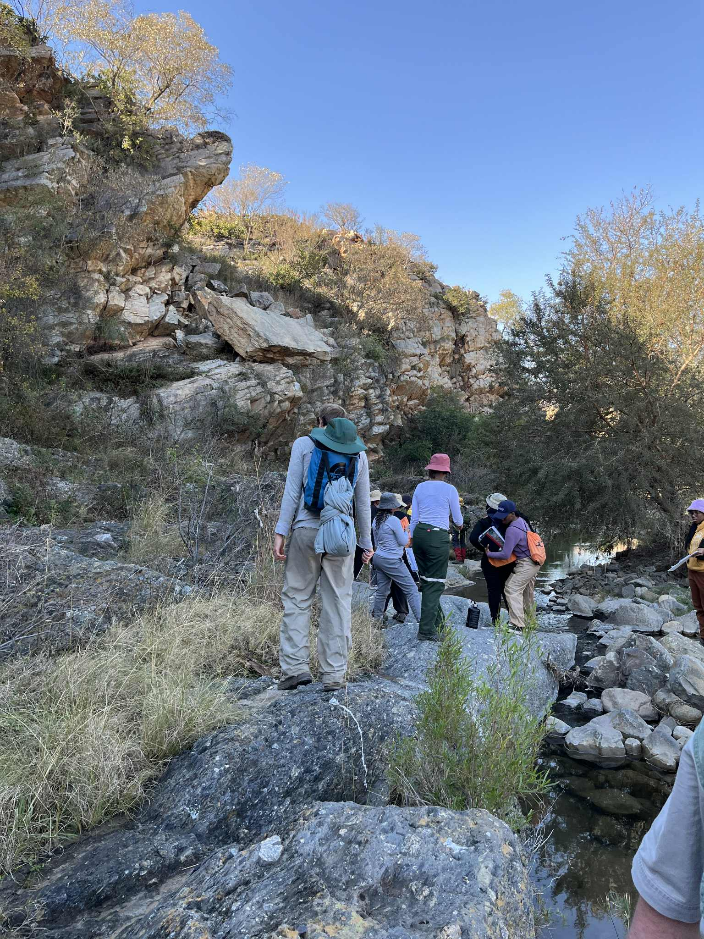
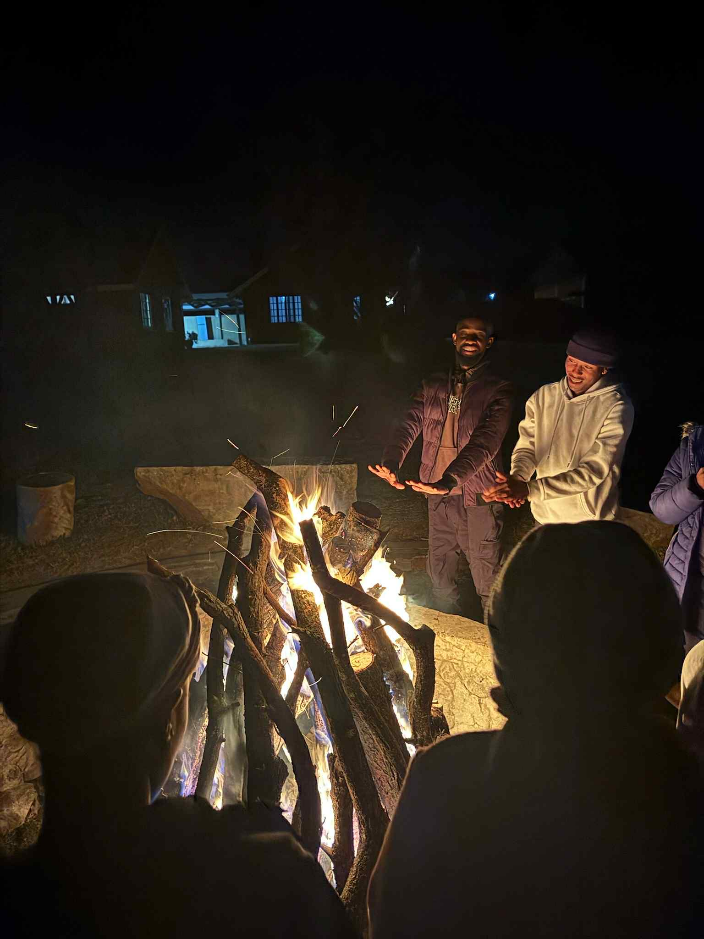
Once we returned to Johannesburg, we launched into work on Vaalrand, devoting the next two days to collecting samples and getting familiar with the rocks. It was both fun and educational, marking the beginning of a long process.
After that, my daily routine varied a lot as I worked on preparing the rocks for uranium-lead dating. The procedure can be long and tedious, and it’s what I spent most of my time in Johannesburg doing. The samples first had to be crushed and milled, then gold panned to separate the heavier minerals. From there, I examined the heavy fraction grain by grain, searching for zircon, the tiny crystals we needed to measure their chemical composition. Everything had to be done carefully to avoid contamination.
Patience is essential in this kind of work, given how time-consuming it can be. When I finally saw my very first age appear on the computer, the long hours melted away, replaced by sheer ecstasy. In that moment, it felt as though every effort had paid off.

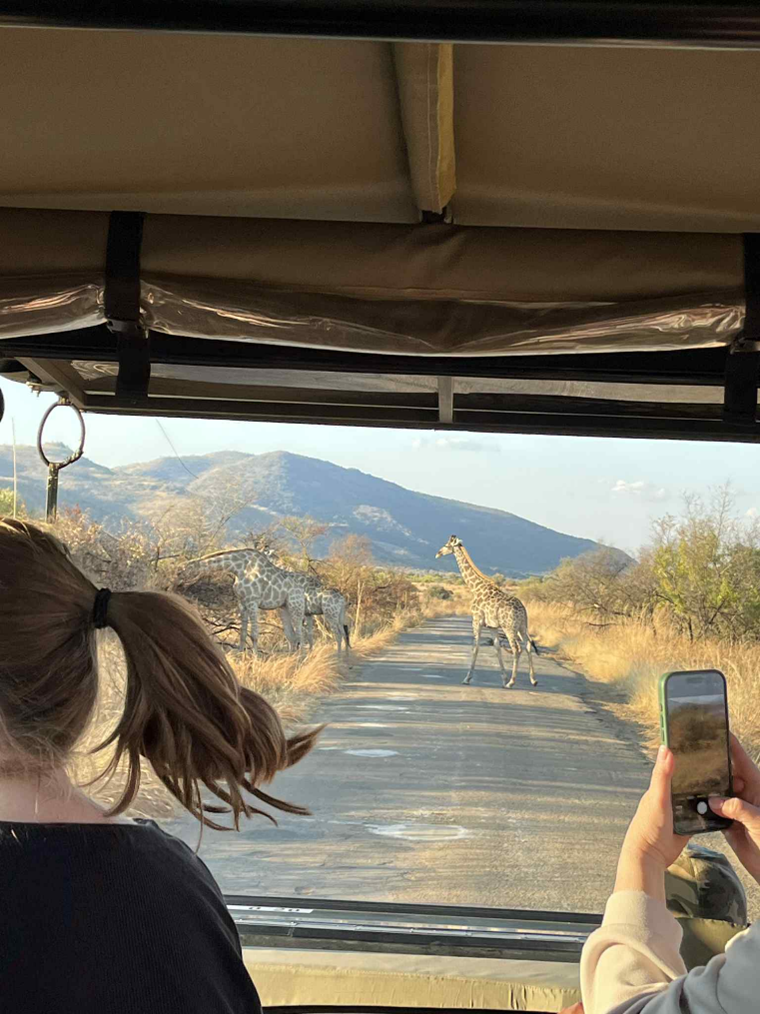
Beyond the lab and my work at UJ, we also had time to experience Johannesburg and see what South Africa has to offer. We tried out great restaurants, explored clubs, and found cozy cafés perfect for Sunday coffee. One of the highlights was going on safari in Pilanesberg National Reserve, an unforgettable chance to see wildlife up close.
Johannesburg often has a reputation for being dangerous, both internationally and among South Africans themselves, but we had a positive experience. The risks are real, of course, yet with some basic precautions, it’s possible to enjoy the city safely. The best advice is to listen to locals, avoid sketchy areas, and don’t walk around with your phone out, as it might get snatched. Ubers are reliable and affordable, and they make it easy to get around securely, which is important in a city as large as Johannesburg.
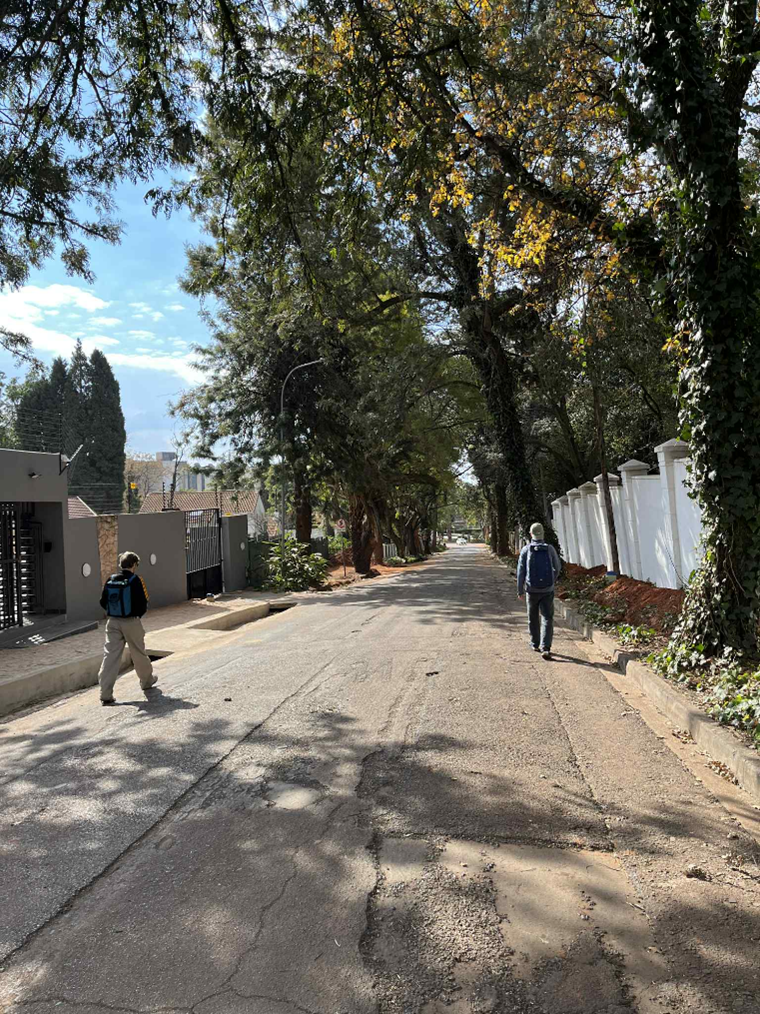
What surprised me most was the large number of trees woven through the city. Johannesburg is said to be one of the largest urban forests in the world, with trees lining nearly every street. I was there in winter, but everyone told me that in summer the city turns purple when the jacarandas bloom, something I’d love to come back and see one day.
This internship has challenged my knowledge of geology and given me some important work and life experiences that I will cherish for the rest of my life.