Category: Fram Strait OBS cruise CAGE 20_05

  • Hidden Fractures of the Mother Earth

    Hidden Fractures of the Mother Earth

    Text and photo: Andreia Plaza-Faverola, researcher CAGE; project leader SEAMSTRESS.

    By the time the last Ocean Bottom Seismometer (OBS) was diving deep into the ocean, big waves and strong winds reached us. We spent a day or so surviving that feeling of seasickness that accompanies you for a while even when you get back ashore.

    Our next objective was to investigate how the geology underlying the OBSs. For this the University vessel ( RV Helmer Hanssen) is equipped with several instruments that produce and record acoustic waves of various frequencies. The lower the frequency of the wave, the deeper we manage to penetrate the ground to gain a picture of the underlying structures. But the higher the frequency, the more detail we get. We used every instrument available to get a highly detailed 3D image of the underground.

    We collected geophysical data along 12 profiles and with the software onboard immediately produced spectacular “radiographies” of the Mother Earth’s submerged mountains and cracks beneath the seafloor in this remote part of the globe.

    We started with 2D surveys (the ship moves in a straight line). Everything went so smooth and the excitement about amazing data was such, that we decided to do a 3D survey (the ship moves in parallel and closely spaced lines and the recorded data is then interpolated to get a volume).

    To image deeper we use an air source that produces an acoustic signal with 20-500 Hz. For 2D lines, we connect the cables one after the other one (we refer to it as the green spaghetti).

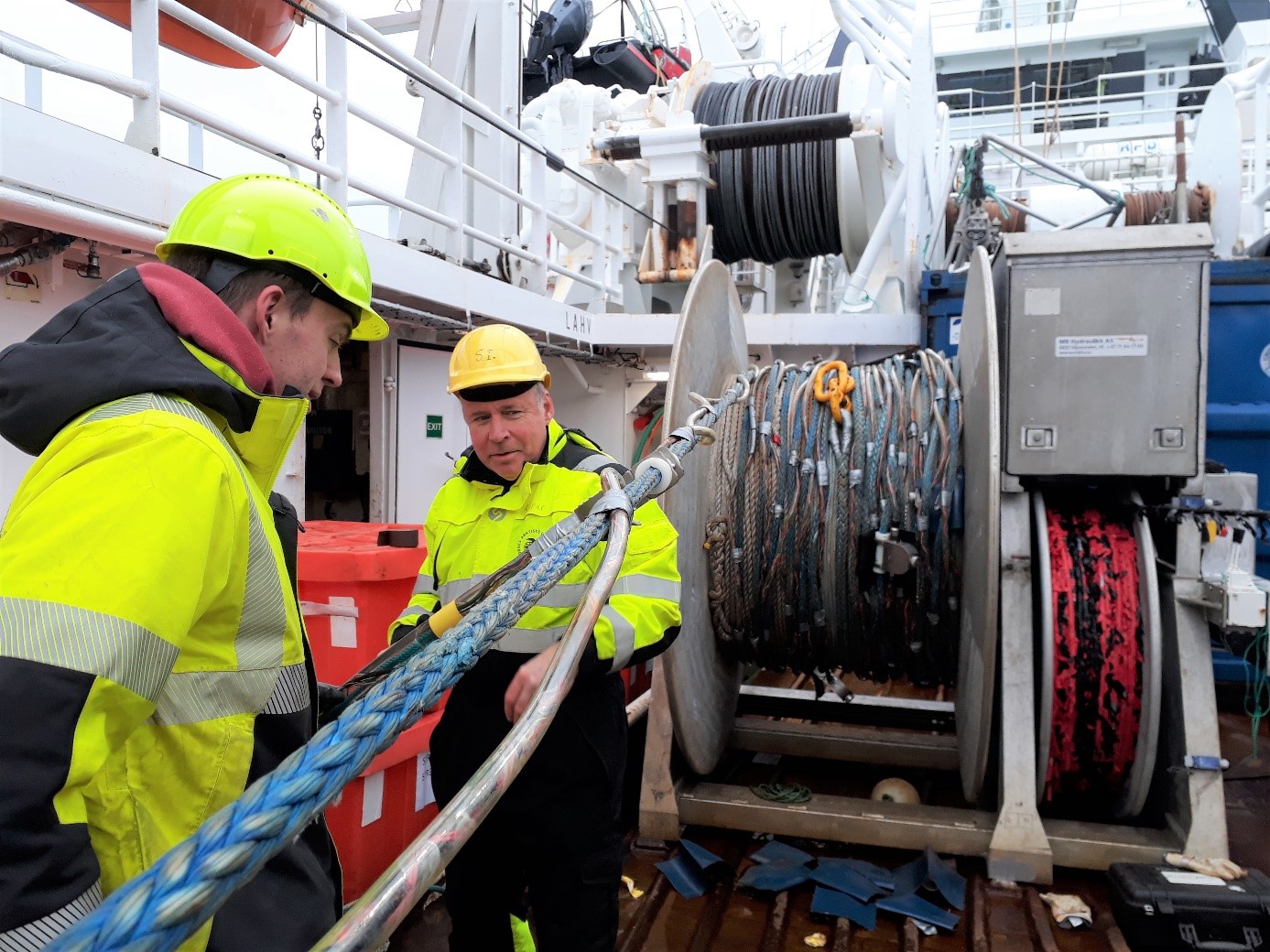
    The green spaghetti (the hydrophone cables) is rolled out on the deck while we change from 2D to 3D mode.

    To image in 3D we put the cables one next to the other. Changing from one configuration to the other one implies a lot of action on deck for the crew, our engineers, ourselves and even our colleagues form AWI helped on deck pulling and connecting hydrophones for the surveys. Also, the processing team had a lot of action and a sufficient amount of data to keep us awake during the night shifts.

    Stormer and Steinar carefully dry and put leads in the hydrophone connectors while Henning and Vera (AWI) wait for the next hydrophone cable to role it into the box.

    It was a productive research cruise with a great crew and lots of inspiring moments. We had intense research discussions and collected significant data sets for the Seamstress project. Part of the new lines complement a data set we are using for a scientific drilling proposal (IODP).

    We sail satisfied to our next target before heading to our final destination: Home!


  • Searching for the unexpected signals in the deep sea

    Searching for the unexpected signals in the deep sea

    Text and photo: Andreia Plaza-Faverola, researcher CAGE; project leader SEAMSTRESS

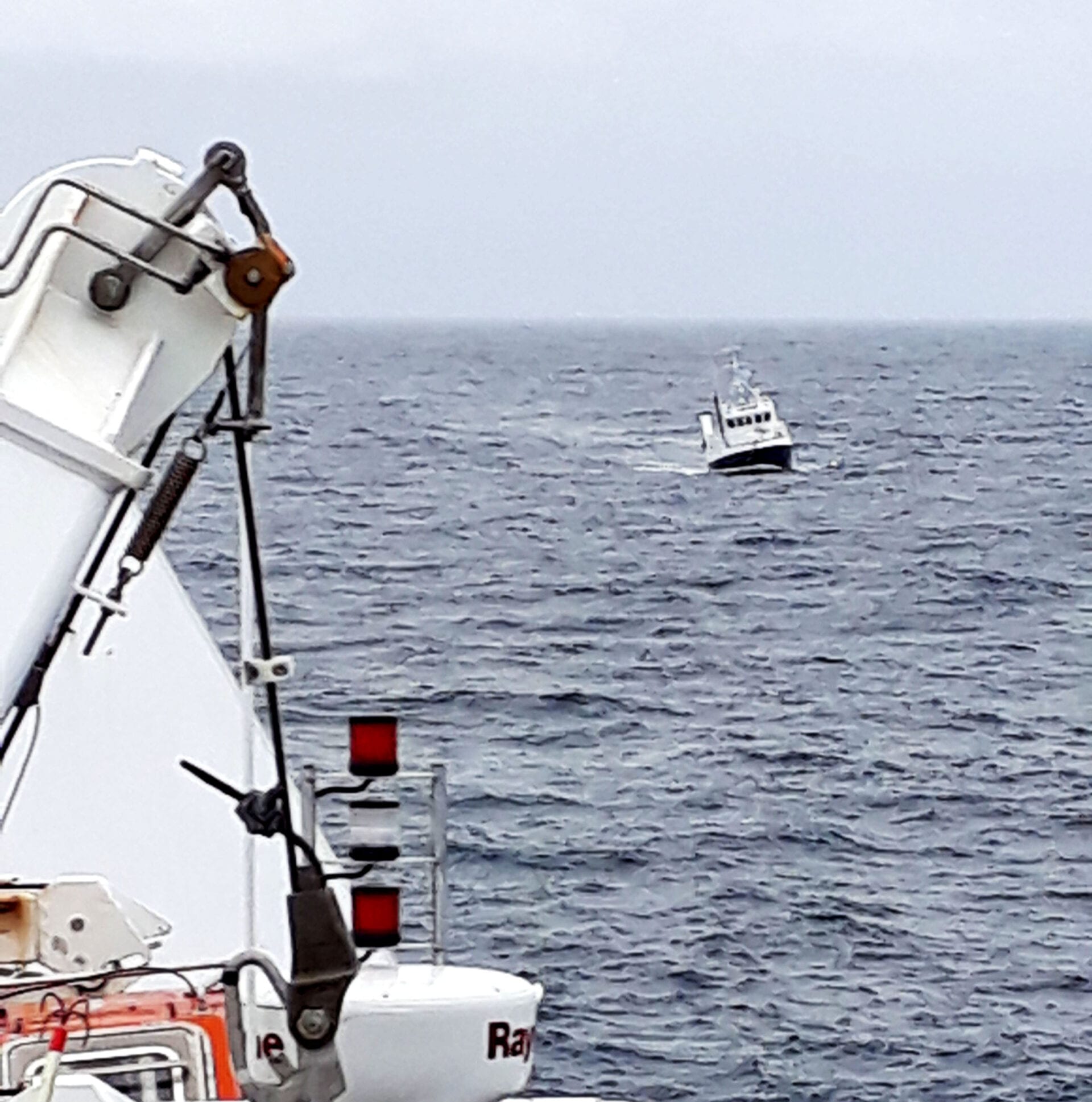
    We started the cruise abiding by the law of the sea (we assisted a smaller ship that was in trouble). Luckily for the crew of the small ship and for ourselves, the weather was nice and the sea calm. Next, we collected the seven seismometers (five from Geomar, two from UiT) that were at the ocean floor since last year. Now it was time to launch  the next part of our experiment.

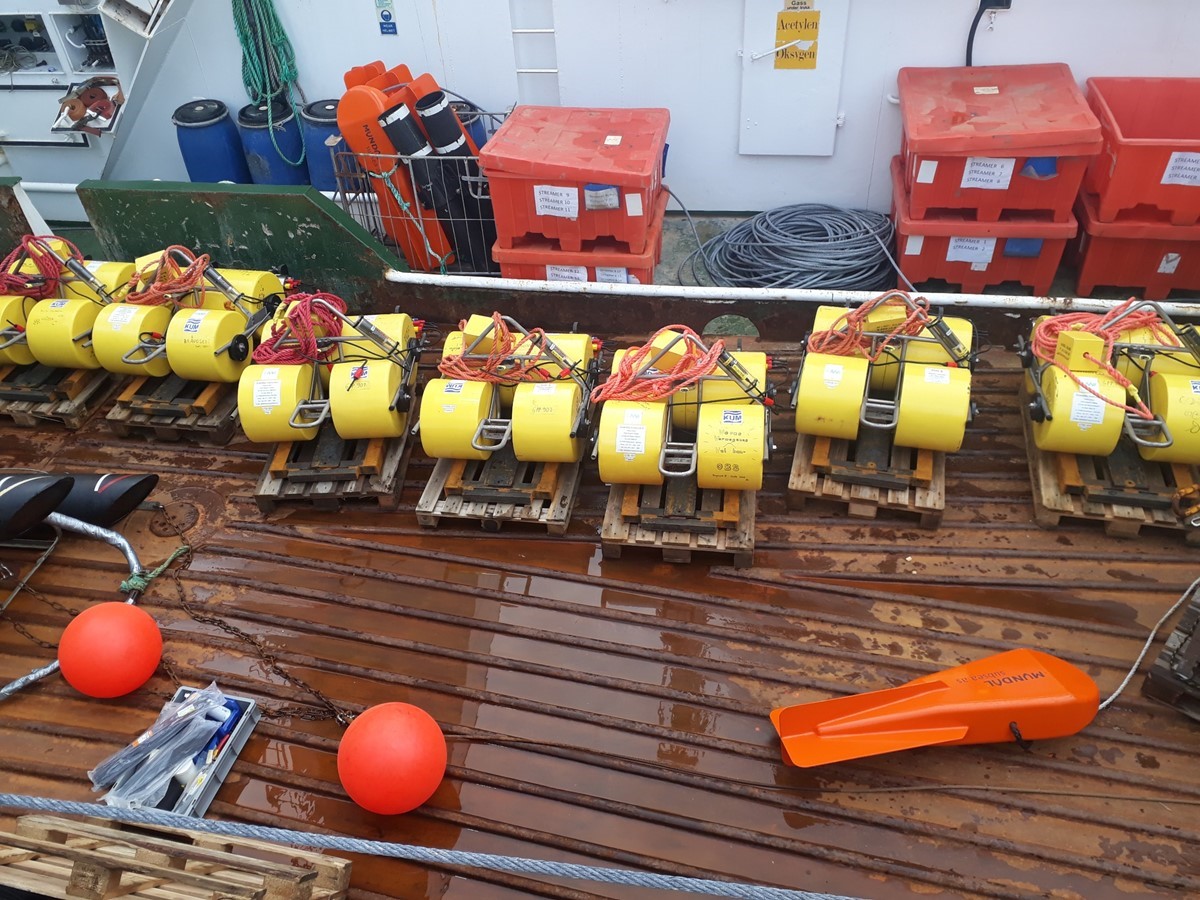
    This time we left 10 seismometers at the bottom, eight from AWI and two from UiT, distributed in a faulted region north of the Knipovich Ridge. In average the deployment of each instrument took about an hour. This included a test of the releasers. The releasers were placed in a cage and sendt down to 2000 meters water depth,  to check whether they were receiving the signal from the ship and responding with the task they were asked to do (open the hook!, close the hook!, send a signal back to the ship!, etc). Some of the releasers failed to obey in the last minute, almost like a child who refuses to do this and that. So they needed to be replaced (the releasers…). It was a long couple of days for all, in particular for those preparing the instruments to be thrown overboard.

    Henning (AWI) observes and ensures that the OBS is carefully lowered to the sea surface by the crew member who operates the crane. Photo: Andreia Plaza-Faverola.

    Placing the instruments at sea went smooth. Now we all wait until next year to recover the instruments and hope that they recorded small earthquakes originating from, or somehow related to, faults that show up at the seafloor. These in turn may be related to the opening of the Knipovich mid-Ocean ridge. Since shallow seismicity is not expected in the zone where the instruments sit,  what we really are hoping for is that the instruments will record something unexpected.

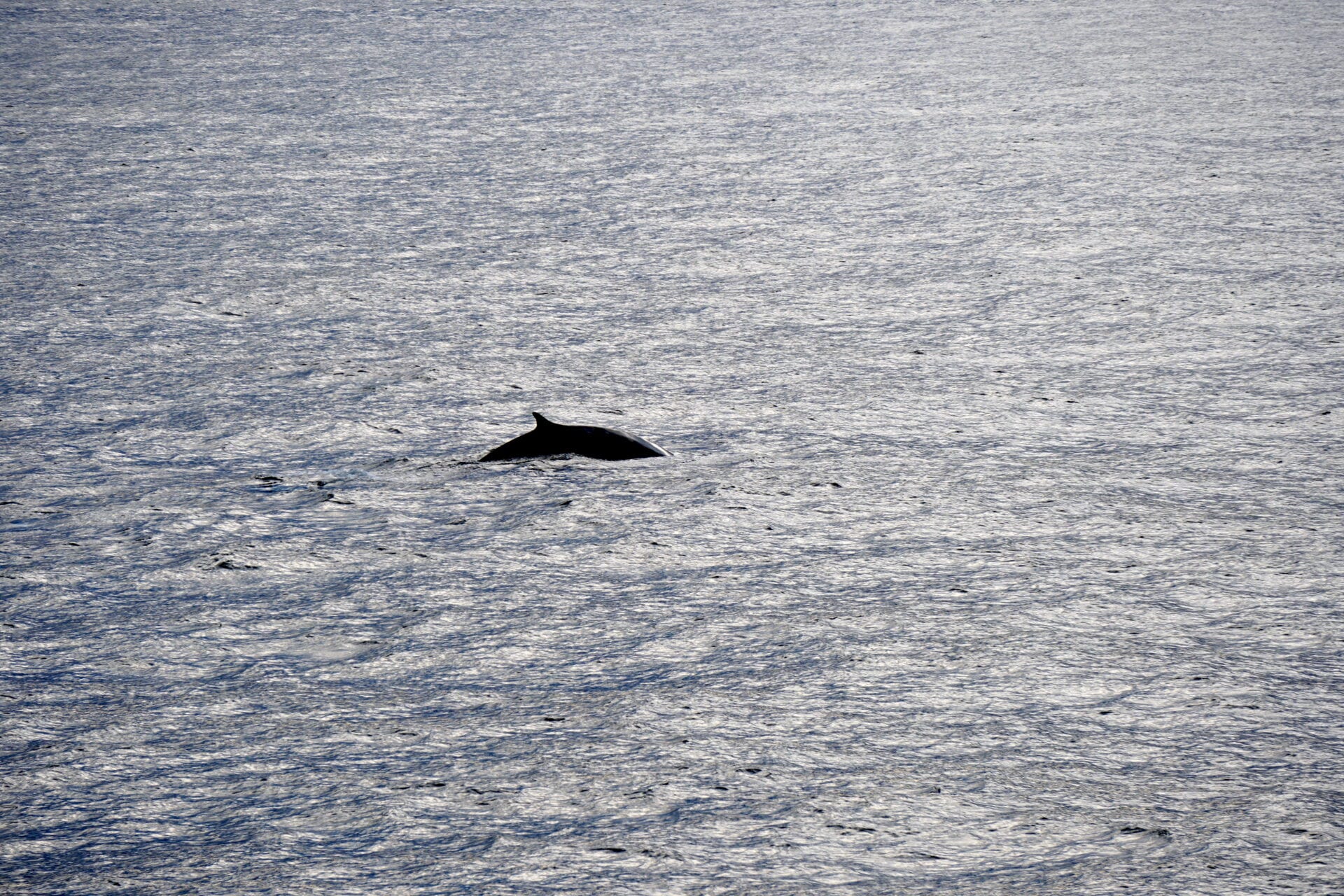
    Towards the end the whales were still with us and the wind was in our favour.

    From left to right: an instrument, the crew and a whale. Photo by Vera Schlindwein
  • A special kind of fishing trip

    A special kind of fishing trip

    Text and photos: Andrea Plaza-Faverola, researcher CAGE; project leader SEAMSTRESS.

    Seven ocean bottom seismometers (OBS) have been recording earthquakes for about a year at more than 1000 m water depth offshore the west-Svalbard margin. In a calm sea, surrounded by whales and dolphins we fished out one by one. We managed to retrieve all of the instruments.

    Each seismometer is attached with a hook to an iron frame that keeps them on the sea-bottom for the desired recording period. To bring them back to the surface they are released from their weight using an acoustic device that sends a signal from the ship through the water, and basically tells the hook to rotate to free the instrument so that it can float up. When one instrument is released, we are all out on the bridge looking for it to show up in the horizon.

    Sunil, Przemek, and Stefan enjoy the calm sea while waiting for the instrument to appear on the surface.

    When the OBS is at the surface one of the crew fishes it out and grabs it with the crane or picks it up using the dingy.

    Usually it takes about half an hour for one OBS to raise through 1200 meters of water. There is always a latent fear of not getting the instruments back to the surface. But once again the operation was successful, and we retrieved the seven instruments.

    An OBS picked up from the sea and safely placed back on the ship using a crane.


  • An altruistic beginning for SEAMSTRESS expedition

    An altruistic beginning for SEAMSTRESS expedition

    Text: Andreia Plaza-Faverola, leader. SEAMSTRESS project.


    The second expedition to continue with the Ocean Bottom Seismic (OBS) experiment for the SEAMSTRESS project, started in Tromsø on the 19th of August 2020. This part of the experiment aims at collecting the seismometers that have been recording seismic signals since last summer around the Vestnesa Ridge. We will also be placing new seismometers closer to the northern termination of the Knipovich mid-ocean ridge axis (check the map below). We are working closely with our colleagues from the Alfred Wegener Institute (AWI) in Germany. They bring the expertise on seismology as well as needed instrumentation.

    The west-Svalbard continental margin is very much closed to the active mid-ocean ridge and is thus a natural laboratory to study the impact of regional tectonic processes on shallow Earth processes, such as the release of methane to the ocean. Illustration: Domel/Vadakkepuliyambatta

    The continental margins are classified as tectonically active if one plate is colliding against another plate. They are classified as inactive if the continental plate is far away from the middle of the oceans (mid-ocean ridges) where new rocks are constantly produced. But what happens if a continental margin is not so far away from the mid-ocean ridges? This is what we are investigating. We are searching for small earthquakes along a supposedly inactive margin (the west-Svalbard margin). The presence of earthquakes originated at faults that are away from the mid-ocean ridge would indicate that the movement of oceanic plates at the mid-ocean ridges, spreads to fractures and broken parts of the continental plate along the so-called passive continental margins. Processes such as the release of methane to the oceans from these margins may be affected by tectonic movement from the oceanic ridges.

    We have been transiting to the Fram Strait for about 48 hours already. Before starting with the OBS experiment we plan to collect seismic lines that are needed to complete a proposal for the International Ocean Discovery Program (IODP).

    But not all is about pursuing scientific objectives. We are currently towing a small passenger boat that called for help because they got a rope (garbage floating in the ocean) entangled in their propeller. Our captain rescued them and will tow them until the coast guard takes over or until we can leave them in a safe place. We needed to postpone the first surveys and adjust the schedule. Most likely we will need to reduce the amount of data we collect this time but we will take with us a good feeling of solidarity.