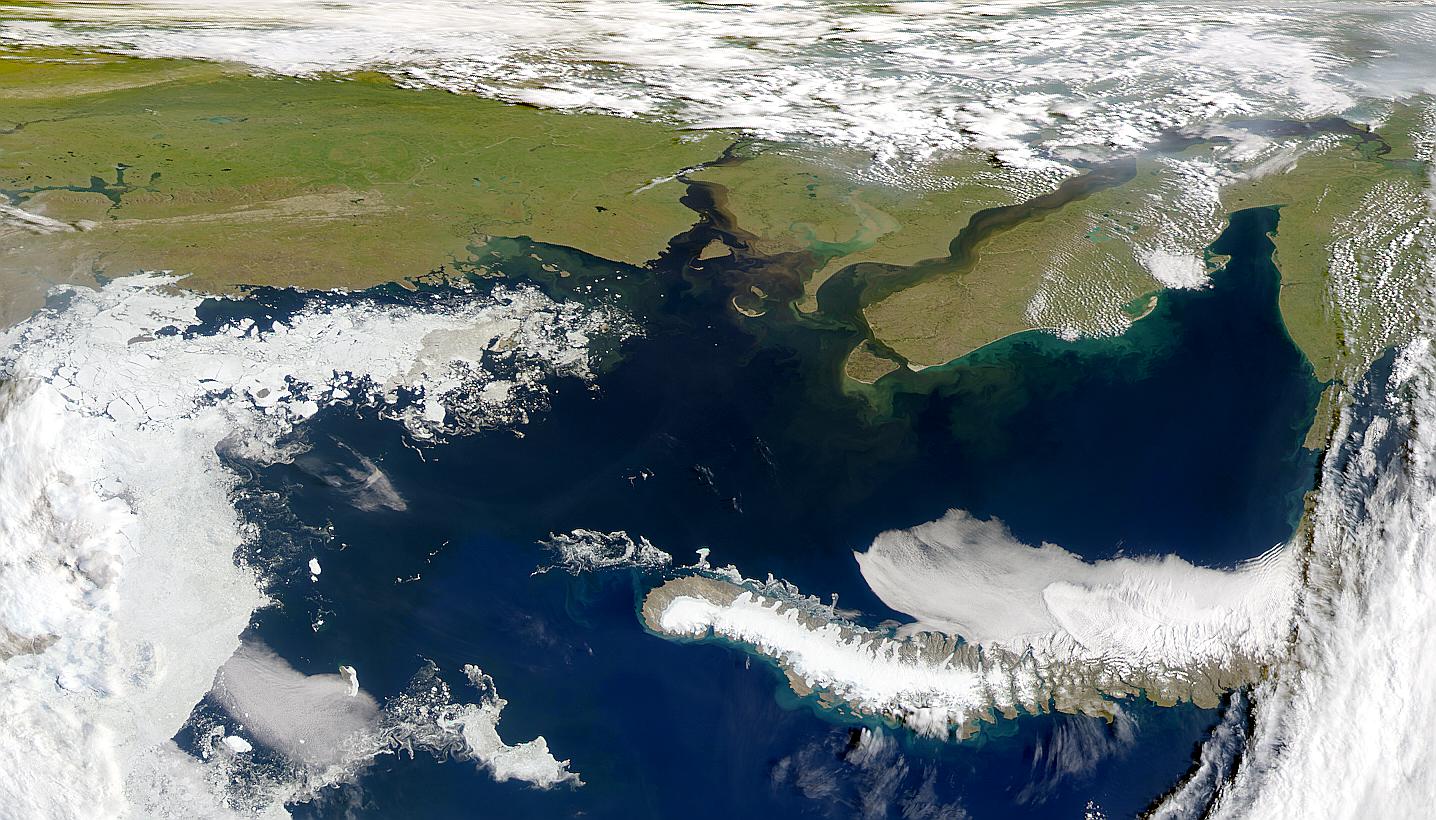
The magnificent images of a crater on Yamal Peninsula, caused by collapsing permafrost, have become world famous. But did you know that this permafrost extends to the ocean floor? And it is thawing.
Text: Maja Sojtaric
Text: Maja Sojtaric
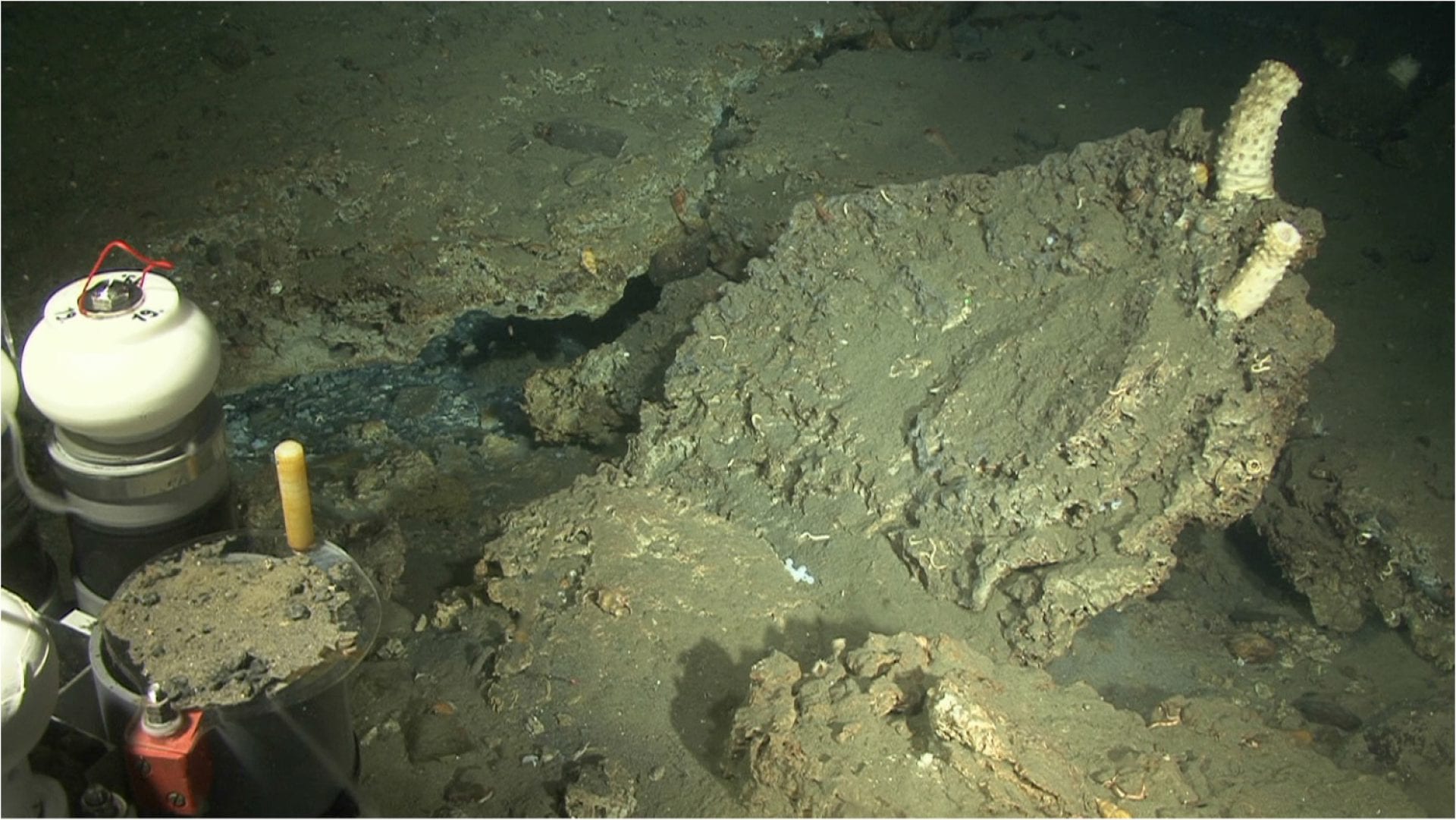
Methane seepage from gas hydrates off the coast of Svalbard has been observed regularly. A study now confirms that this seepage has been going on for several thousand years, and therefore cannot solely result from new climate changes driven by mankind.
These findings are the result of an international collaboration led by Christian Berndt from Geomar in Kiel, Germany, and was recently presented in Science with CAGE researcher Bénédicte Ferré (pictured right) as co-author.
One of the main questions CAGE asks is whether future climate changes will increase methane release from gas hydrates in the ocean.
The researchers can now conclude that previous observations of large contemporary emissions cannot be considered proof of accelerating hydrate destabilization.
‘Our findings indicate that methane seepage has been going on longer than first assumed in this area, independent of anthropogenic warming,’ Bénédicte explains.
However, this does not mean that we can’t draw a line between climate change and unstable gas hydrates.
‘This is still worrying because although this seepage is not caused by warming, that doesn’t mean that future global warming won’t cause destabilization of gas hydrates,’ Bénédicte says.
Gas hydrates are only stable at high pressure and low temperatures. It is therefore of major importance to keep monitoring methane release, particularly in sensitive areas like the Arctic. One of CAGE’s effots for understanding rapid changes in methane release is to install permanent monitoring stations on the ocean floor.

CAGE researchers Jochen Knies, Karin Andreassen, Soma Baranwal and Karl Fabian have contributed to a recent publication in Earth and Planetary Science Letters which presents new knowledge of the Arctic climate in the Pliocene.
The researchers conclude that a tectonic uplift event four million years ago intensified the ice build-up during the Northern Hemisphere Glaciation.
Previously it has been very challenging to study environmental changes in the Arctic Ocean because available data is difficult to date. However, the researchers have now studied a sequence from the Yermak Plateau off northwestern Spitsbergen which they have dated back to the Pliocene (5.33 to 2.58 million years ago).
They have collected sedimentary and geochemical data which indicate that the terrigenous sediment supply and sources changed abruptly in response to a regional tectonic uplift event. Hence the landmasses were preconditioned for glacial ice build-up during the intensification of the Northern Hemisphere Glaciation. The result was the first large build-up of glaciers in Scandinavia, Svalbard and the Barents Sea – 2.75 million years ago.
Knowledge about what happened in the Arctic during the Pliocene is important for a better understanding of future climate changes. The sea ice was possibly gone during the summer and the treeline may have been shifted further north compared to today, according to Jochen Knies.
“I think our findings will be a ‘master stratigraphy’ for the Arctic Ocean in many years to come, until new drilling initiatives are implemented. That means that the interpretations of climate change based upon this sequence will be used a lot by climate modellers to get a better understanding of Pliocene and future climate changes”, says Knies.
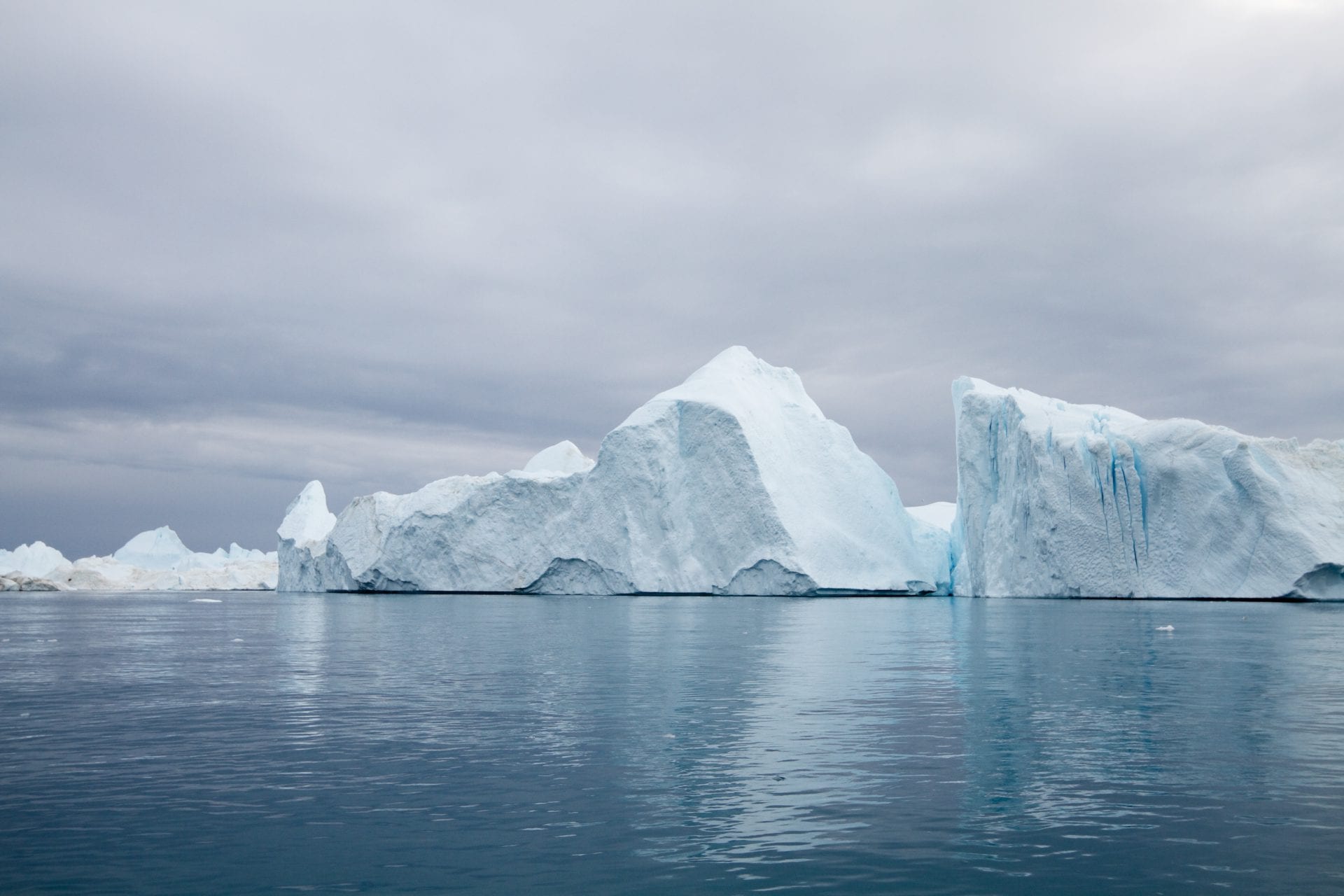
The centre’s application for the project ‘Ice2Ice’ was one of 13 that were accepted after a fierce competition with 450 other applicants from all over Europe.
The University of Bergen and Uni Research is now granted eleven million NOK per year over the next five years to conduct basic research on melting ice in the Arctic. The main question the paleoclimate researchers will ask is: What will happen to the Greenland Ice Sheet if the Arctic sea ice covers disappear?
CAGE congratulate the Bjerknes Centre for Climate Research with this prestigious grant, and wish them good luck with their research.

Rasmussen’s article shows that repeated, severe melting of the ice sheet contributed to a very unstable climate even during the Ice Age.
Together with Erik Thomsen from Aarhus University in Denmark she has studied sediment cores from the sea off north-western Svalbard. The studies show that the ice sheet shrank and grew again to a much greater extent than assumed during the last ice age.
 “Our findings show that the ice was incredibly active. In less than 1,000 years it could retreat and grow again”, says Rasmussen (pictured right).
It is safe to assume that the ice moved several kilometres.
The cold climate during the Ice Age was repeatedly interrupted by short, rapid heating. This knowledge can help us understand what will happen during the global warming we experience today.
“This information is of great importance, although the consequences of melting ice will be much less dramatic now than during the Ice Age, because there is less ice and temperature changes was much larger back then”, Rasmussen explains.
Sediment cores the researchers have investigated contains pink marine sediments. This pink clay can be traced back to 400 million years old red sand stones at Svalbard, and was carried out to sea by melt water from the ice sheet.
“We can see that the red layers of the ocean floor is formed during the Ice Age’s warm periods, and that proves that every time the temperature rose, water from the melting ice was poured into the ocean”, says Rasmussen.
“We know from previous studies that in few years the temperatures above Greenland could rise by more than 10 degrees Celsius, and during the Ice Age the ocean’s water level rose and fell several times by as much as 10 to 20 metres”, she says.
The sediment cores also show that the number of icebergs fell dramatically during these heating periods, and that the ice retreated from the coast.
This article is also published at Forskning.no (Norwegian version) and ScienceNordic.com.