https://www.cristin.no/as/WebObjects/cristin.woa/wa/fres?action=sok&nr=1051244
Zamelczyk, Katarzyna // Rasmussen, Tine Lander // Manno, Clara // Bijma, Jelle // Bauerfeind, Eduard
https://www.cristin.no/as/WebObjects/cristin.woa/wa/fres?action=sok&nr=1051244
Zamelczyk, Katarzyna // Rasmussen, Tine Lander // Manno, Clara // Bijma, Jelle // Bauerfeind, Eduard
https://www.cristin.no/as/WebObjects/cristin.woa/wa/fres?action=sok&nr=1048653
Kristensen, Dorthe Klitgaard // Rasmussen, Tine Lander // Koc, Nalan
https://www.cristin.no/as/WebObjects/cristin.woa/wa/fres?action=sok&nr=1039437
Zamelczyk, Katarzyna // Rasmussen, Tine Lander // Manno, Clara // Bauerfeind, Eduard // Bijma, Jelle
https://www.cristin.no/as/WebObjects/cristin.woa/wa/fres?action=sok&nr=1033116
Hormes, Anne // Gjermundsen, Endre // Rasmussen, Tine Lander
https://www.cristin.no/as/WebObjects/cristin.woa/wa/fres?action=sok&nr=1028335
Rørvik, Kari-Lise // Rasmussen, Tine Lander // Hald, Morten // Husum, Katrine
https://www.cristin.no/as/WebObjects/cristin.woa/wa/fres?action=sok&nr=1028331
Inceoglu, F. // Olsen, J. // Rasmussen, Tine Lander // Singarayer, J.S. // Austin, W.E.N.
https://www.cristin.no/as/WebObjects/cristin.woa/wa/fres?action=sok&nr=1028330
Olsen, J. // Rasmussen, Tine Lander // Reimer, Paula J.
https://www.cristin.no/as/WebObjects/cristin.woa/wa/fres?action=sok&nr=1024948
Consolaro, Chiara // Rasmussen, Tine Lander // Mienert, Jurgen // Sztybor, Kamila
https://www.cristin.no/as/WebObjects/cristin.woa/wa/fres?action=sok&nr=994007
Kaufman, D. // Cooper, K. // Behl, R. // Billups, K. // Bright, J. // Gardner, K. // Hearty, P. // Jacobsson, Martin // Mendes, I. // O’Leary, M. // Polyak, Leonid // Rasmussen, Tine Lander // Rosa, F. // Schmidt, M.
https://www.cristin.no/as/WebObjects/cristin.woa/wa/fres?action=sok&nr=918183
Zamelczyk, Katarzyna // Rasmussen, Tine Lander // Husum, Katrine // Hald, Morten

 Joel (pictured right) is an associate professor of geology at the University of New Hampshire (UNH) in the US, and is spending the next year on sabbatical leave in Tromsø.
“When I received the advertisement for positions at CAGE I was immediately motivated to inquire about a possible sabbatical position,” Joel says.
Joel’s research expertise is within marine geology and geophysics, and he has been studying continental margin turbidite and gas hydrate systems since 1999.
He has plenty of experience from drilling and research expeditions, and has also developed a course on shipboard sedimentology for the IODP, which was taught for the first time last year.
At CAGE Joel will work across two research groups: ‘Sub seabed: The role of ice ages for fluid flow and methane hydrate’ and ‘Paleo-methane history through the Neogene-Pleistocene’.
He is looking forward to continue this research in Tromsø, and describes his colleagues at UiT as an impressive research group with broad experience.
“I wish to capitalize on the opportunity to discuss gas hydrate science with a large hydrate specific research group”, he says, and adds: “This is a very unique and wonderful opportunity to make significant advancements in our field.”
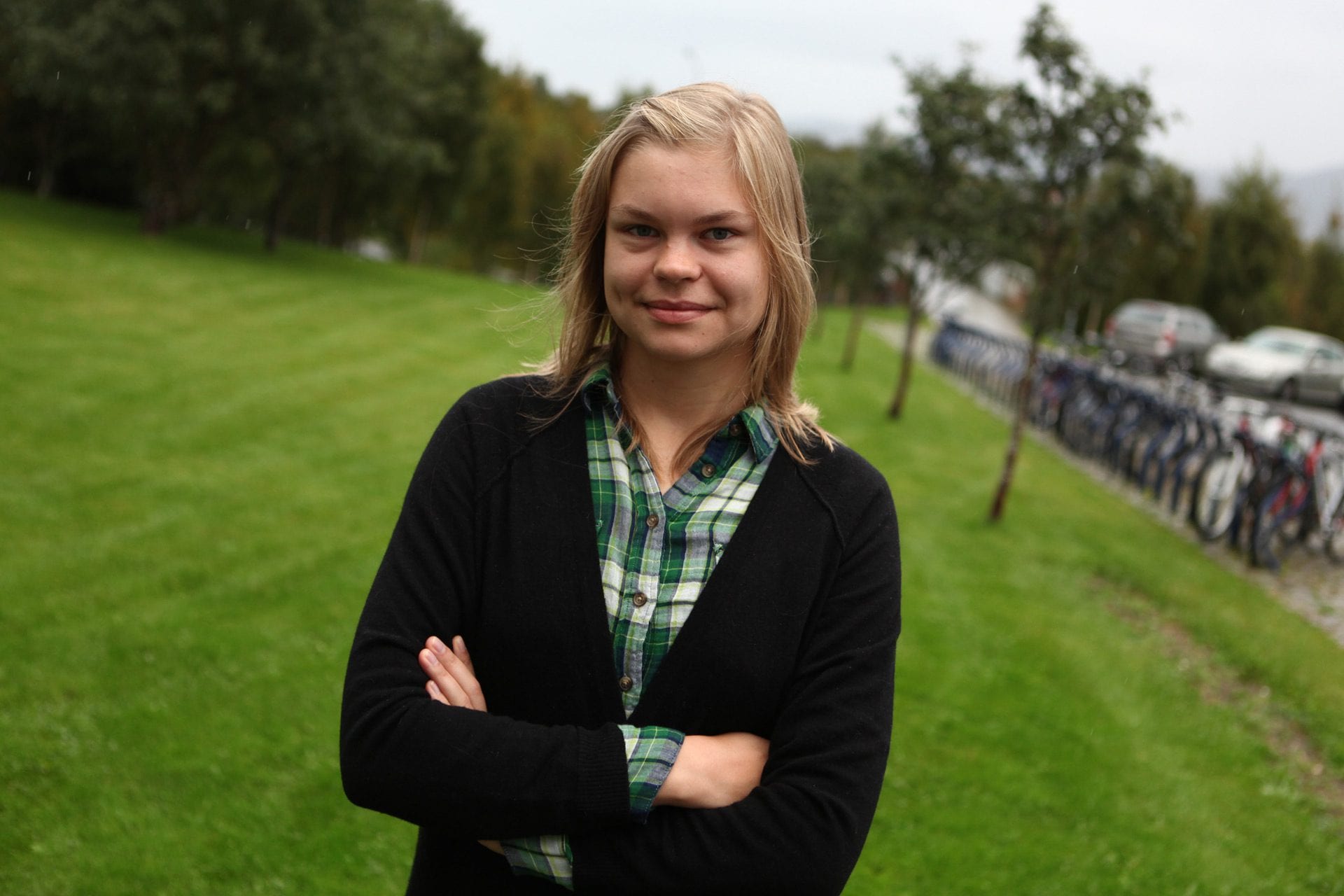
At CAGE Anna (pictured above) will work across several research groups, mainly investigating methane escape and how this can modify the carbon chemistry in the water column and contribute to on-going ocean acidification.
In her PhD project she worked with chemical oceanography, while her master’s thesis was on physical oceanography. She thinks this broad background will benefit her in her future research.
“The Arctic research is getting more interdisciplinary, and I think a broader overview gives you a better understanding of the whole system,” she explains.
The Russian researcher came to Norway in 2008, and has spent four years at another Norwegian Centre of Excellence – the Bjerknes Centre for Climate Research in Bergen – where she did her PhD work.
“I hope to make use of my experience from the Bjerknes Centre here at CAGE,” she says.
She moved to Tromsø a year ago with her husband, and finished the writing of her PhD thesis here. When she heard about CAGE she didn’t hesitate to express her interest in a research position.
“High-quality research and good publications make the Norwegian Centres of Excellence well-known nationally and worldwide,” she says.
Anna is passionate about communicating new science, and thinks research is worth little if no-one knows about it. According to her, in addition to publishing papers and presenting work at conferences, there are plenty of ways for researchers to get their message across – using social media, collaborating with schools, or appearing in the media, just to name a few.
“Every researcher has a responsibility to make his or her research known, by presenting it in the best possible way to all kinds of people,” she says, and adds:
“That way you’re also a good representative for your institution”.
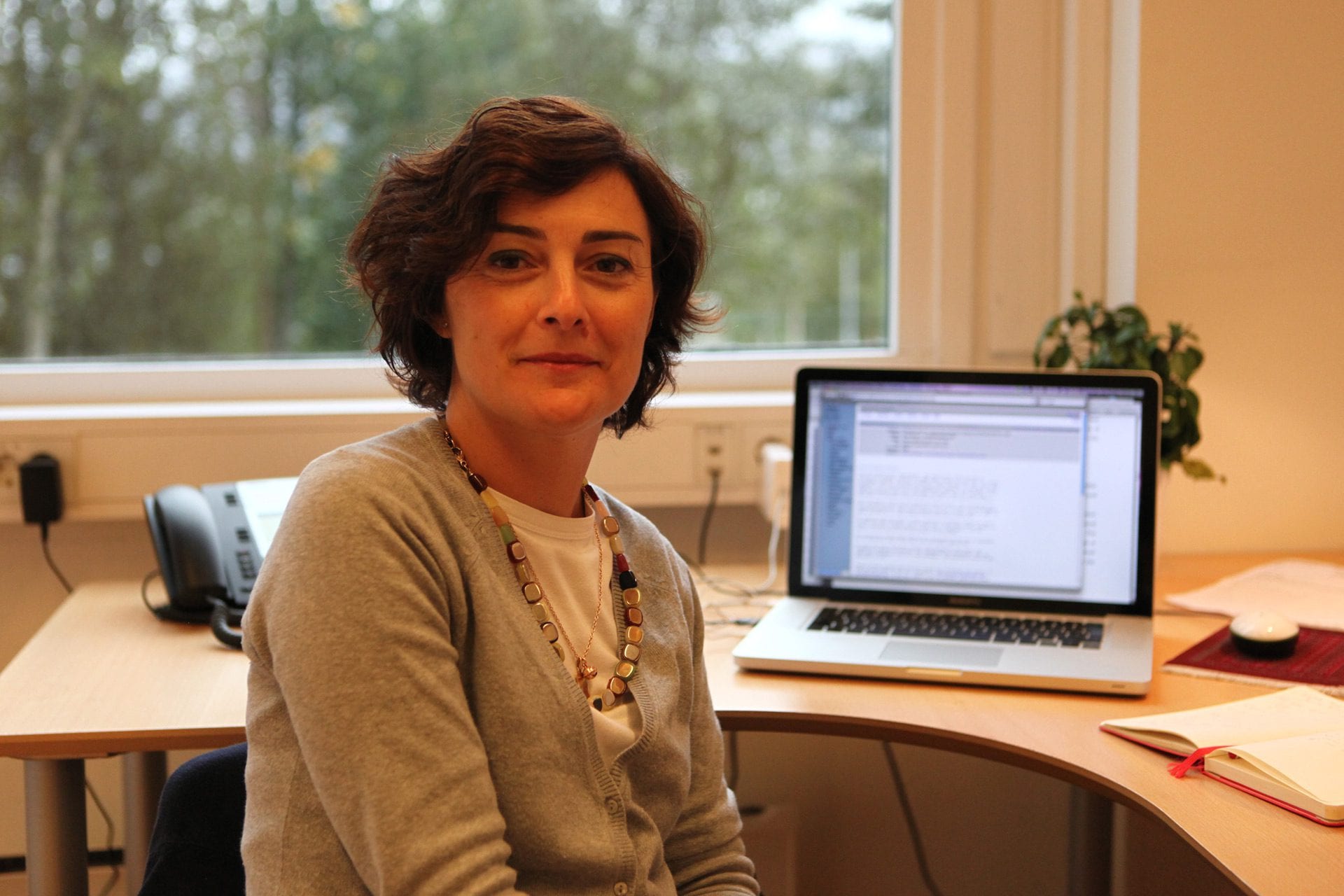
An offer to study foraminifera organisms in the Arctic was more than the micropalaeontologist could resist.
“I really wanted to be part of CAGE, and feel like Tromsø is the place I need to be right now”, Giuliana (pictured above) explains enthusiastically.
The centre’s new associate professor is mainly interested in foraminifera in methane emission sites. The species distribution and geochemistry of the foraminifera shells can indicate the presence of methane in the marine environment.
“Foraminifera organisms have a wide geographical distribution in different types of marine environments. That means that they are easy to find. Potentially they also exist in all stratigraphic sections, which make them useful for studying the past”, Giuliana says.
Micropalaeontology is a traditional discipline which she will use as a new and innovative tool to reveal the foraminifera’s undiscovered secrets. When using this approach, this group of organisms can reveal past methane emissions and related climate changes.
Giuliana has visited Tromsø a few times before, and has also been teaching at UiT. Now she is very happy to live here permanently.
“My husband and I both agree that this will be a good place for the children to grow up. It’s been a big jump, but we definitely see a future here”.
Her two children have already settled in, and are speaking some Norwegian after just two weeks in Tromsø.
“When I see them at the international school in the morning, it’s like being in an airport – everyone is talking in their own language. It’s amazing to be in such an open, multicultural society,” Giuliana says.

A revised map of subsea permafrost in the Kara Sea reveals permafrost has degraded more significantly than previously thought. New paper by Portnov et al. was recently published in Geophysical Research Letters.
http://geoforskning.no/nyheter/grunnforskning/289-to-nye-geofaglige-sff-sentre
http://www.ngu.no/no/Aktuelt/2012/13-nye-fremragende-forskningsmiljoer/
http://uit.no/ansatte/organisasjon/nyhetsartikkel?p_document_id=320151&p_dimension_id=88209&p_menu=28723&p_lang=2
http://www.forskningsradet.no/no/Nyheter/Tretten_nye_sentre_for_fremragende_forskning/1253981443858?lang=no