

Around the world in four days
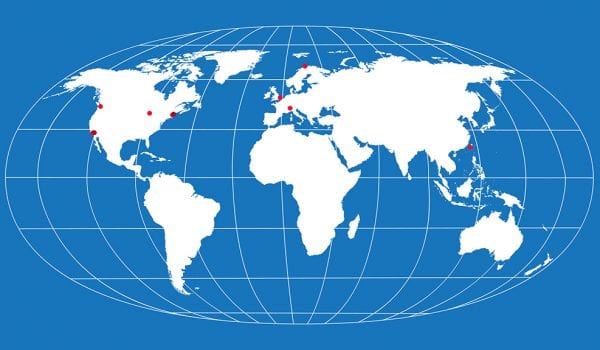
CAGE hosted 13th international conference on gas in marine sediments (GIMS) in Tromsø this week. Text: …

New steering committee member: Kristina Helland-Hansen
Kristina Helland-Hansen, head of Exploration Technology department at Statoil, has accepted a position as a …
Read more «New steering committee member: Kristina Helland-Hansen»
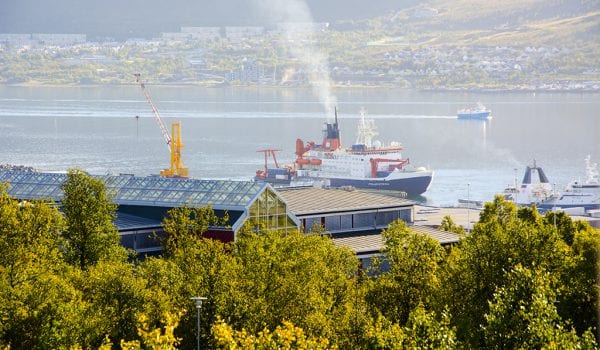
Methane sensor retrieved by RV Polarstern
German research vessel Polarstern has retrieved a CAGE methane sensor from 2600-meter water depth in the Fram …

Sediments control methane release to the ocean
Whether greenhouse gas methane escapes from the ocean floor depends on the characteristic of the …
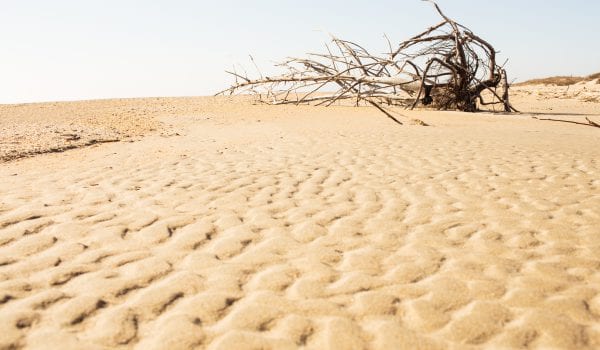
Arctic clues on worst mass extinction of life
Extreme global warming caused a severe mass extinction of life on Earth 252 million years …

Sea ice strongly linked to climate change in past 90 000 years
Expansion and retreat of sea ice varied consistently in pace with rapid climate changes through …
Read more «Sea ice strongly linked to climate change in past 90 000 years»

Specialized life forms abound at Arctic methane seeps
Methane seeps have strong effects on the community structure at the bottom of the Arctic …
Read more «Specialized life forms abound at Arctic methane seeps»

What does Arctic Ocean have to do with Indian monsoons?
The sea ice cover in the Arctic is important to more than polar bears and …
Read more «What does Arctic Ocean have to do with Indian monsoons?»

Successful ROV expedition to methane seeps in High Arctic
The expedition was a collaboration between two Norwegian centres of excellence – NTNU AMOS and …
Read more «Successful ROV expedition to methane seeps in High Arctic»

Observatories, long-term greenhouse gas data retrieved from the Arctic Ocean
CAGE scientists have recently retrieved two long-term observatories that have been sitting on the ocean …
Read more «Observatories, long-term greenhouse gas data retrieved from the Arctic Ocean»

CAGE Annual Report 2015
Read about some of our achievements in 2015 in our Annual Report.

CAGE PhD candidate receives Cushman Award
PhD candidate Katarzyna Melaniuk was recently rewarded Loeblich and Tappan Student Research Award by Cushman …

Methane not escaping into the atmosphere from Arctic Ocean
Methane gas released from the Arctic seabed during the summer months leads to an increased …
Read more «Methane not escaping into the atmosphere from Arctic Ocean»

Retreat of the ice followed by millennia of methane release
Methane was seeping from the seafloor for thousands of years following the retreat of the Barents Sea …
Read more «Retreat of the ice followed by millennia of methane release»

Drilling for gas hydrates in the Arctic
We don’t know enough about the amounts of methane stored under the sea floor. CAGE is going …

Giant craters and fauna thriving on methane
Two early career scientists from CAGE, Malin Waage and Emelie Åström, held a press conference …

Ice streams can be slowed down by gas hydrates
A sticky spot the size of a small island once slowed down a large ice stream. It was comprised …

Craters in Barents Sea not connected to Bermuda Triangle
Multiple giant craters have been discovered on the ocean floor in the Barents Sea. Contrary to …
Read more «Craters in Barents Sea not connected to Bermuda Triangle»

How safe is CO2 storage under the sea floor?
Capture and storage of CO2 beneath the sea floor is an important strategy in the …

“Ice age blob” of warm ocean water discovered south of Greenland
Greenland experienced several abrupt and severe climate changes during the last ice age. But even during …
Read more «“Ice age blob” of warm ocean water discovered south of Greenland»

Clams help date duration of ancient methane seeps in the Arctic
A bed of fossilized, methane dependent clams has for the first time been observed in …
Read more «Clams help date duration of ancient methane seeps in the Arctic»

Welcome to the GIMS13 conference in Tromsø
CAGE is proud to host the 13th conference on Gas in Marine Sediments in Tromsø, …

Arctic Ocean preparations in the hunt for the oldest ice in Antarctica
Scientists are getting ready to drill for an ice core holding the oldest ice on …
Read more «Arctic Ocean preparations in the hunt for the oldest ice in Antarctica»

Ice sheets may be hiding vast reservoirs of powerful greenhouse gas
A new study in Nature Communications shows that ice sheets may be keeping vast reservoirs of …
Read more «Ice sheets may be hiding vast reservoirs of powerful greenhouse gas»

New steering committee member: Ingrid Schjølberg
Ingrid Schjølberg, the director of NTNU Ocean science and technology in Trondheim Norway, has accepted …
Read more «New steering committee member: Ingrid Schjølberg»

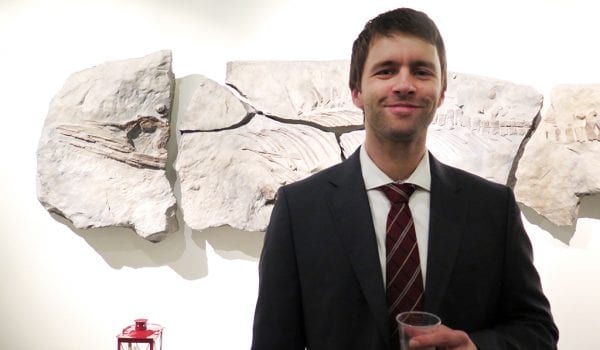
Eythor Gudlaugsson defends PhD in glaciology
Congratulations to Dr. Gudlaugsson who recently defended his thesis “Modelling subglacial hydrology of the former Barents …

AMAP: Arctic Ocean as future source of methane
CAGE-scientists Anna Silyakova and Giuliana Panieri have contributed to the latest AMAP assessment on methane as …

Methane feeds subsea ice mounds off Siberia
Huge mounds, pingos, are discovered on the seabed offshore Siberia. They are forming because of the …

New methane sensor installed in the Arctic Ocean
German research vessel Polarstern went to the Fram Strait on an expedition this year. On …
Read more «New methane sensor installed in the Arctic Ocean»

CAGE contributes to Gordon Conference
Gordon Research Conferences are a group of prestigious international scientific conferences covering frontier research in …

How do we measure greenhouse gases in the ocean?
That was one of the main questions raised at a workshop, recently arranged by our …
Read more «How do we measure greenhouse gases in the ocean?»
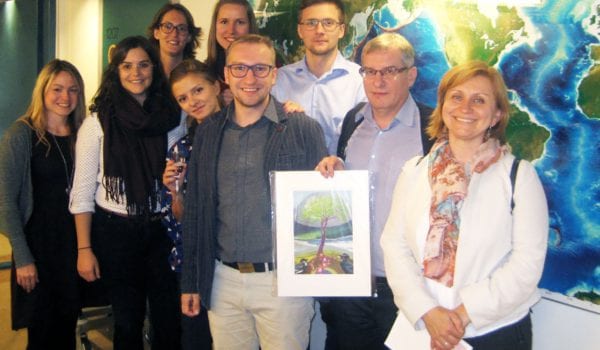
Aleksey Portnov defends thesis on permafrost
Congratulations to Dr. Portnov who recently defended his thesis Role of subsea permafrost and gas hydrate …

Field trip to Italy sparks scientific imagination
[types field=”Blogging from the field”][/types] Our early career scientists went recently on a field trip to …
Read more «Field trip to Italy sparks scientific imagination»

Methane observatories successfully deployed in the Arctic
Mysteries still abound about methane release from the ocean floor. Two state of the art …
Read more «Methane observatories successfully deployed in the Arctic»
CAGE installs new mass spectrometer
Tromsø will soon be one of few places in the world where scientists can analyze clumped …

CAGE director visits new laboratory in Trondheim
CAGE director Jürgen Mienert recently visited the new 2G Cryogen Magnetometer that is being installed by …
Read more «CAGE director visits new laboratory in Trondheim»

The Power of Ice
Ice has weighed heavy on the Arctic for at least two million years. And now …

Exceptional view of deep Arctic Ocean methane seeps
Close to 30.000 high definition images of the deep Arctic Ocean floor were captured on a …
Read more «Exceptional view of deep Arctic Ocean methane seeps»

Soma Baranwal receives award
Dr. Soma Baranwal has been selected as the recipient of the 2015 W. Storrs Cole …

Patton Wins Best Poster Award
Dr. Henry Patton, post doctoral researcher at CAGE, won an award for best poster at PAST …

Dr. William Ambrose appointed as Program Director at NSF
Dr. William Ambrose, who is currently a visiting scholar at CAGE, has been appointed as new …
Read more «Dr. William Ambrose appointed as Program Director at NSF»

Annual report for 2014
We have had a busy year in 2014, with many achievements and discoveries. You can …

Ocean currents disturb methane-eating bacteria
Bacteria that feed on methane can control its concentration once it is released from the …

Are gas hydrates an environmentally sound energy source?
That is one of the questions that COST Action MIGRATE is trying to answer. Stefan …
Read more «Are gas hydrates an environmentally sound energy source?»

CAGE is partner in new climate research school
Norwegian Research Council supports the national climate research school, CHESS, with over 2,5 million Euro. The …

New source of methane discovered in the Arctic Ocean
A reservoir of abiotic methane has been discovered in the Arctic Ocean. This means that …
Read more «New source of methane discovered in the Arctic Ocean»

Blog: Measuring greenhouse gases in the Arctic
Our post. doc Anna Silyakova spent six weeks frozen into an ice floe in the …

Ezat wins award
Mohamed Ezat, PhD student at CAGE, recently won an award for best student lecture at …

Frozen – a story of groundbreaking research in the Arctic Ocean
Dr. Anna Silyakova will spend six weeks frozen into Arctic sea ice on board Research Vessel Lance. Her goal is to …
Read more «Frozen – a story of groundbreaking research in the Arctic Ocean»

Methane seepage from Arctic seabed occurring for millions of years
Natural seepage of methane offshore the Arctic archipelago Svalbard has been occurring periodically for at …
Read more «Methane seepage from Arctic seabed occurring for millions of years»

Collaboration provides fresh view of the Arctic Ocean floor
Woods Hole Oceanographic Institution is famous for its development of groundbreaking technology for ocean research. …
Read more «Collaboration provides fresh view of the Arctic Ocean floor»

Visit from our Advisory Board
Advisory Board for CAGE is composed by accomplished international scientists. Yesterday three of them visited …

Scientists intrigued by a unique volcano on the ocean floor
Norway has two active volcanoes. One is the northernmost subaerial volcano in the world, Beerenberg …
Read more «Scientists intrigued by a unique volcano on the ocean floor»


Methane is leaking from permafrost offshore Siberia
The magnificent images of a crater on Yamal Peninsula, caused by collapsing permafrost, have become …
Read more «Methane is leaking from permafrost offshore Siberia»

Methane flares in the Arctic dwarf the Golden Gate Bridge
Methane gas flares, up to 800 meters high, rise from the Arctic Ocean floor. That …
Read more «Methane flares in the Arctic dwarf the Golden Gate Bridge»

The emergence of modern sea ice in the Arctic Ocean, 2.6 million years ago
“We have not seen an ice free period in the Arctic Ocean for 2,6 million …
Read more «The emergence of modern sea ice in the Arctic Ocean, 2.6 million years ago»
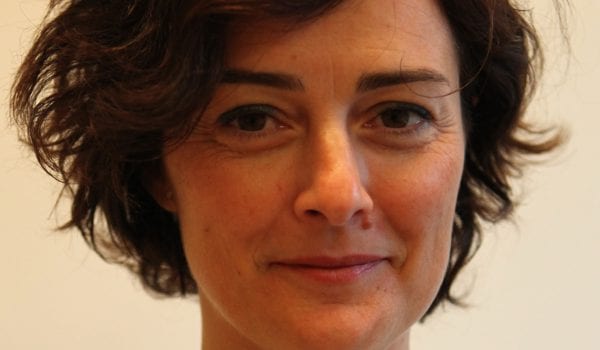
Panieri giving talk at The Niels Bohr Institute
Associate Professor Giuliana Panieri has been invited to the internationally acclaimed research institution, Niels Bohr …

Meet our little ROV helper
This summer CAGE scientists picked up methane-derived rocks from the ocean floor, using a remotely …