Category: Past CAGE Events

  • Methane in a changing Arctic: the final international CAGE conference

    Methane in a changing Arctic: the final international CAGE conference

    For nearly 10 years, CAGE has been an active contributor to the global conversation on the role of methane in a changing Arctic and related environmental issues. CAGE’s main goal is to quantify methane release beneath the Arctic Ocean, and to assess its potential impact on marine environments and global climate in the past, present and future. As CAGE entered its last months of a Norwegian Centre of Excellence, we invited scientists from all around the world to join us for the final international conference that CAGE would host, on ‘Methane in a Changing Arctic’.

    Text: Mariana Esteves

    Held between 14-16th September at UiT the Arctic University of Norway, the conference brought together more than 140 scientists, from 14 different countries, to discuss all aspects of Arctic methane and its role in the global carbon cycle. Our goal was to provide interdisciplinary forum for discussion and exchange of knowledge relating to our current understanding of these complex systems and their response to and impact on, the rapid environmental and climatic changes that characterise the Arctic.

    In total we had eight sessions, with over 90 presentations (both oral and poster):

    1. Methane in the geosphere: subsurface thermogenic, (a-)biogenic and methane stores and sinks
    2. Methane in the hydrosphere: methane processes and budgets in marine and lacustrine settings
    3. Methane in the cryosphere: methane dynamics in ice sheets and permafrost
    4. Methane in the atmosphere: methane source, sinks, and budget in the atmosphere
    5. Microbial cycling of methane: the role of microbes in methane budgets
    6. Past methane histories: past methane processes and budgets as analogues for future climate scenarios
    7. Science and Art
    8. Outreach and Education

    We would like to thank all who participated and attended the CAGE International Conference on Methane in a Changing Arctic. This conference was a success, promoting important discussions regarding Arctic methane and the global carbon budget.

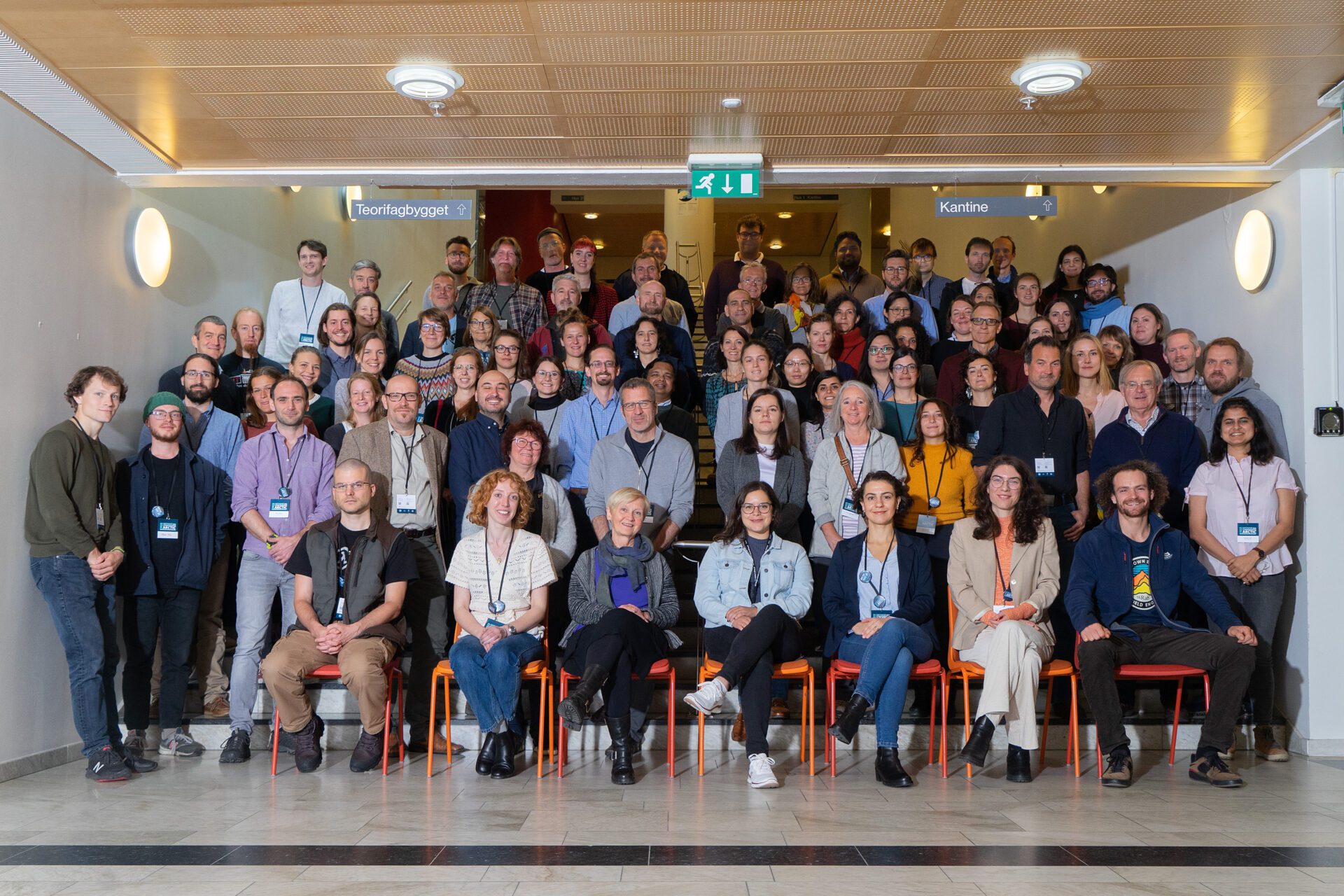
    Conference participants. Photo: Kai Mortensen/UiT


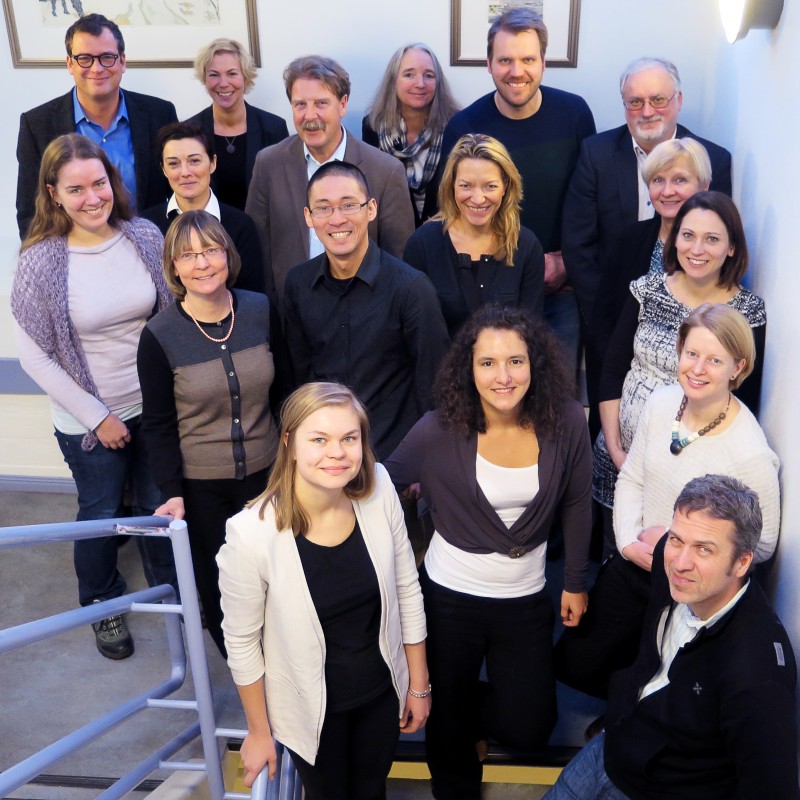
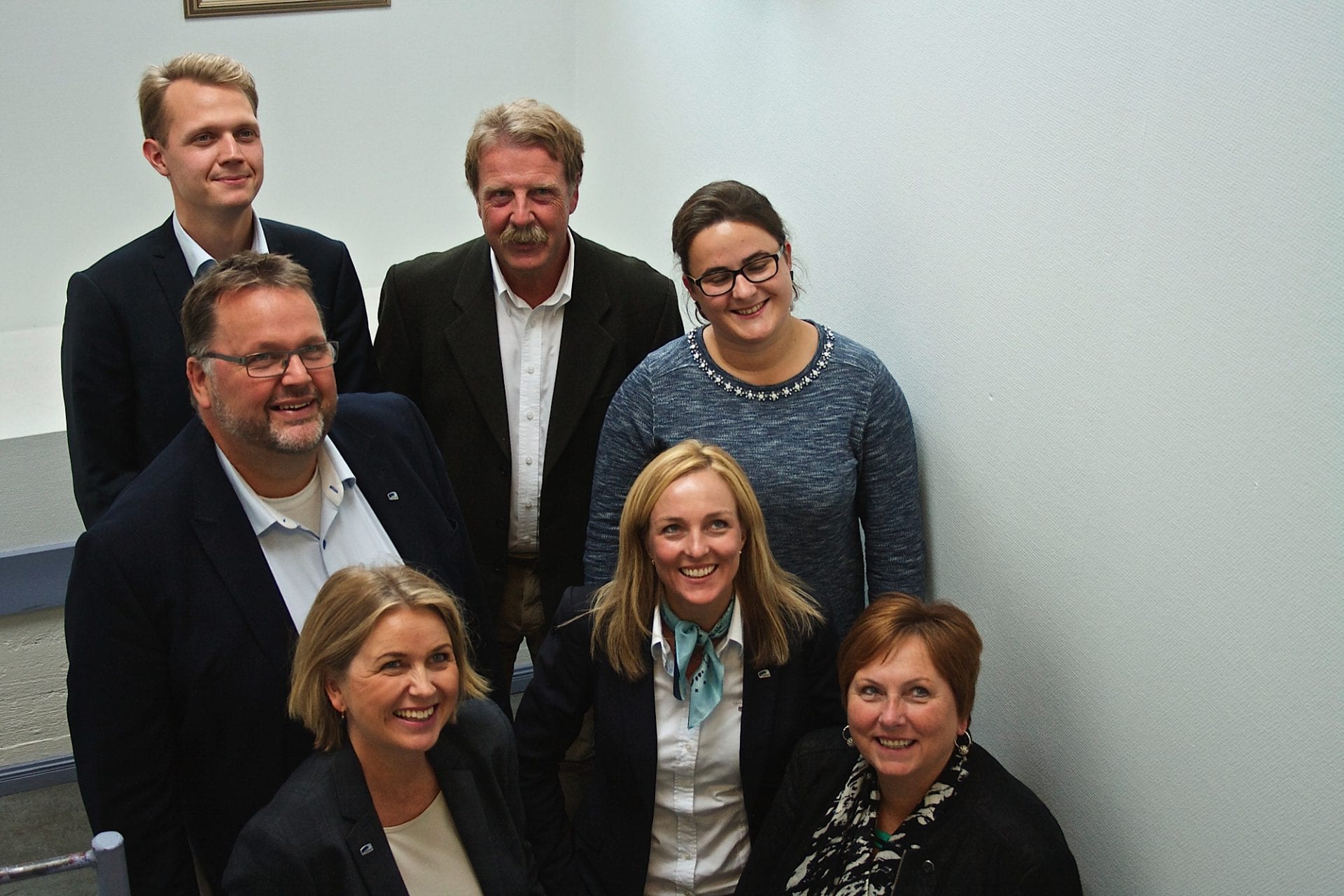
    The organising committee and Master student volunteers. Left to right – Péter Paloczy (Master student), Zeynep Sancak Sert (CAGE Administrative advisor; Co-lead organiser), Freya Sykes (PhD Candidate), Karin Andreassen (Director of CAGE), Marie Stetzler (PhD Candidate), Luke Simmons (Master student), Mariana Esteves (Lead organiser; Project leader for CAGE), and Isaiah Olayiwola (Master student). Photo: Kai Mortensen/UiT


    To read more about the conference: https://site.uit.no/methane-in-a-changing-arctic/ 
    More photographs from the conference on the CAGE Instagram: https://www.instagram.com/cage.coe/
     

  • CAGE Invites Conference on the Changing Arctic: Ocean, Ice, and Climate

    CAGE Invites Conference on the Changing Arctic: Ocean, Ice, and Climate

    We would like to say a big thank you to everyone who participated and to those who presented their research for the stimulating and important talks and posters during the CAGE Invites Conference on the Changing Arctic: Ocean, Ice, and Climate, last Tuesday, 31st May 2022.

    To understand the changes occurring in the Arctic we require collaborative, transdisciplinary action. For this reason, CAGE which is now in its final year, invited numerous Tromsø scientists from the Arctic research community to provide a platform for discussions and the formation of potential synergies between the different Tromsø research institutes and centres. By bringing together the Tromsø Arctic research community to raise awareness of the changing Arctic through a variety of perspectives, we were able to get an overview of the key physical changes, societal implications, and mitigation efforts.

    Below are some photos from the day taken by Kai Mortensen (IG, UiT).

    The day started with a welcome speech by Prof. Camilla Brekke – Pro-Rector for Research and Development, UiT. Photo credit: Kai Mortensen.


    Prof. Karin Andreassen (Director of CAGE) presented ‘Arctic Methane Seepage, gas hydrates, environment and climate’. Photo credit: Kai Mortensen.


    Dr. Sebastian Gerland (leader of Ocean and Sea Ice section at the Norwegian Polar Institute and Co-PI of the Nansen Legacy Project) presented the ‘Changing State of the Climate System, with focus on the Cryosphere: Examples from Chapter 2 of the recent IPCC Sixth Assessment Report Working group 1 (The Physical Science Basis)’. Photo credit: Kai Mortensen.


    The conference was hybrid, with almost 90 people joining us both in-person and digitally. Photo credit: Kai Mortensen.


    Photo credit: Kai Mortensen.


    Photo credit: Kai Mortensen.
    Photo credit: Kai Mortensen.
    Photo credit: Kai Mortensen.
    Prof. Marit Reigstad (PI for the Nansen Legacy Project) presented ‘The Nansen Legacy – new insights to a changing Barents Sea’. Photo credit: Kai Mortensen.
    Dr. Matthias Forwick (Leader of the Department of Geosciences, UiT) presented ‘Environmental changes in the Arctic beyond instrumental records’. Photo credit: Kai Mortensen.
    Prof. Torbjørn Eltoft (Director of CIRFA – Centre for integrated remote sensing and forecasting for Arctic Operations) presented ‘Satellite-based Sea ice monitoring in a climate perspective’. Photo credit: Kai Mortensen.
    Dr. Tore Hattermann (Researcher at the Norwegian Polar Institute and holds an adjunct associate professorship at UiT) presented ‘Modelling the Arctic Ocean – Overview, Challenges and Perspectives’. Photo credit: Kai Mortensen.
    Dr. Hans Christopher Bernstein is an Associate professor at ARC (Arctic Centre for Sustainable Energy)/Faculty of Biosciences, Fisheries and Economics, UiT The Arctic University of Norway, presented ‘Arctic algae and their microbiomes: from ecology to biotechnology’. Photo credit: Kai Mortensen.
    Dr. Maaike Knol-Kauffman, Researcher at the Faculty of Biosciences, Fisheries and Economics, UiT The Arctic University of Norway, presented ‘Activity trends and changing information infrastructures in the marine Arctic’. Photo credit: Kai Mortensen.
    Prof. Ingvild Ulrikke Jakobsen, Director of the Norwegian Centre for Law of the Sea, presented ‘Developing good governance of the changing Arctic by implementing ecosystem approach in Norway’. Photo credit: Kai Mortensen.


    The organising committee for the CAGE Invites Conference. L-R: Prof. Karin Andreassen, Zeynep Sancak Sert, Marie Stetzler, Frances Cooke, Dr. Mariana Esteves. All keynote speakers and members of the organising committee received a copy of Prof Jemma Wadham book ‘Ice Rivers‘. Photo credit: Kai Mortensen.
    Photo credit: Kai Mortensen.


    Photo credit: Kai Mortensen.


    Photo credit: Kai Mortensen.


    Photo credit: Kai Mortensen.
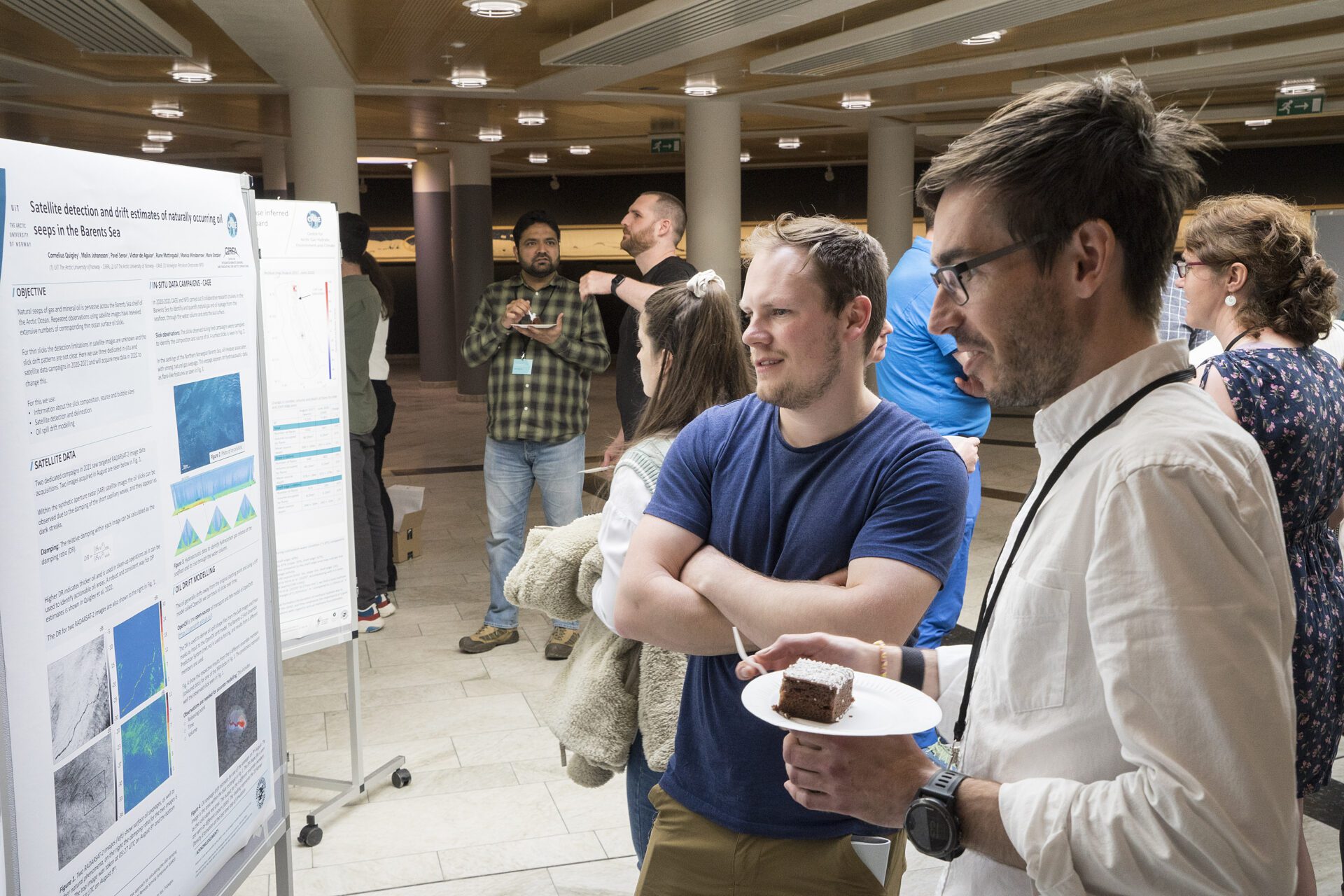
    Poster Session. Photo credit: Kai Mortensen.
    Poster Session. Photo credit: Kai Mortensen.
    Poster Session. Photo credit: Kai Mortensen.
    Poster Session. Photo credit: Kai Mortensen.
    Photo credit: Kai Mortensen.
  • CAGE International Conference on ‘Methane in a changing Arctic’

    CAGE International Conference on ‘Methane in a changing Arctic’

    The Centre for Arctic Gas Hydrate, Environment and Climate (CAGE) at UiT – The Arctic University of Norway welcomes your participation in the International Conference on Methane in a Changing Arctic, to be held in Tromsø, 14-16th September.

    This conference aims to bring together scientists working on all aspects of Arctic methane and its role in the global carbon cycle. It will provide an interdisciplinary forum for discussion and exchange of knowledge relating to our current understanding of these complex systems and their response to and impact on, the rapid environmental and climatic changes that characterise the Arctic.

    The conference will address themes including the formation, storage, cycling, transport, release and budgets of methane through the Arctic geo-, hydro-, cryo- and atmosphere since the onset of Northern Hemisphere glaciation and towards the future. The Conference will have a strong emphasis on integration of these themes, and we encourage all relevant contributions to the following topics:

    • Methane in the geosphere: subsurface thermogenic, (a-)biogenic and methane stores and sinks
    • Methane in the hydrosphere: methane processes and budgets in marine and lacustrine settings
    • Methane in the cryosphere: methane dynamics in ice sheets and permafrost
    • Methane in the atmosphere: methane source, sinks, and budget in the atmosphere
    • Microbial cycling of methane: the role of microbes in methane budgets
    • Past methane histories: past methane processes and budgets as analogues for future climate scenarios

    FOR UPDATED INFORMATION PLEASE VISIT OUR NEW CONFERENCE WEBSITE: https://site.uit.no/methane-in-a-changing-arctic/
    IMPORTANT DATES
    Abstract submission deadline:
    20th June 2022

    Registration deadline:
    14th August 2022


    Do you have any questions?

    If so, contact Mariana Esteves (mariana.esteves@uit.no)

  • CAGE Invites Conference – 31st May 2022

    CAGE Invites Conference – 31st May 2022

    In its final year as a Centre of Excellence, the Centre for Arctic Gas hydrate, environment and climate (CAGE) will organise the CAGE Invites Conference (Tuesday 31st May 2022) to put a focus on the ‘Changing Arctic: Ocean, Ice, and Climate’.
    With several keynote speakers from the Tromsø Arctic research community, this conference will present work related to the changing Arctic, from identifying the physical changes (past, present, and future), to the societal implications, and mitigation efforts.
    Understanding the changes occurring in the Arctic requires collaborative and interdisciplinary action. We, therefore, would like to invite and encourage all those interested, to contribute to the discussion, either by attending and/or presenting a poster.

    More information below.


    Click to expand the flyer and view it in full resolution. 

    More information
    How can I sign up?

    Sign up to attend using the registration form link below.
    Registration form (deadline extended to 22nd April!): https://nettskjema.no/a/239415

    You can provide information regarding

    Registration fee

    There is no registration fee for this event. This also includes those who have registered to have lunch/finger food.

    Can I attend without presenting?

    Yes! Of course, we welcome everyone to join us! Just sign up through the online registration form (deadline extended to 22nd April!): https://nettskjema.no/a/239415

    Will the presentations be streamed online?

    Yes! Please register by the deadline and we will send the link to the event nearer the day.

    Do you have dietary requirements or allergies?

    Please notify us using your registration form.


    Information and deadlines for presenters

    Please upload your abstracts using the attachment link on the registration form by the 31st March. If you have difficulties with this, send the abstract to Mariana Esteves (mariana.esteves@uit.no).

    Keynote speakers

    Please send your completed presentations to Mariana Esteves (mariana.esteves@uit.no), no later than 23rd May.

    Each presentation should be less than 15 mins to allow time for questions.

    Poster presentations

    There is no restriction on the size of the posters, although ideally no bigger than A0. If you use something that cannot be put up using tape or white tack, please bring your own stand/attachments. We will have volunteers who can help you put these up. The posters should be put up before the start of the conference (10am, 31st May). There will be volunteers to help at Solhallen (outside of Auditorium 1) from 08:30.


    Do you have any additional questions?

    If so, contact Mariana Esteves (mariana.esteves@uit.no)

  • CAGE research featured in new geological exhibition at museum in Tromsø

    CAGE research featured in new geological exhibition at museum in Tromsø

    The new permanent exhibition at The Arctic University Museum of Norway tells the story of our planet from a geological perspective, including pioneering research conducted at CAGE

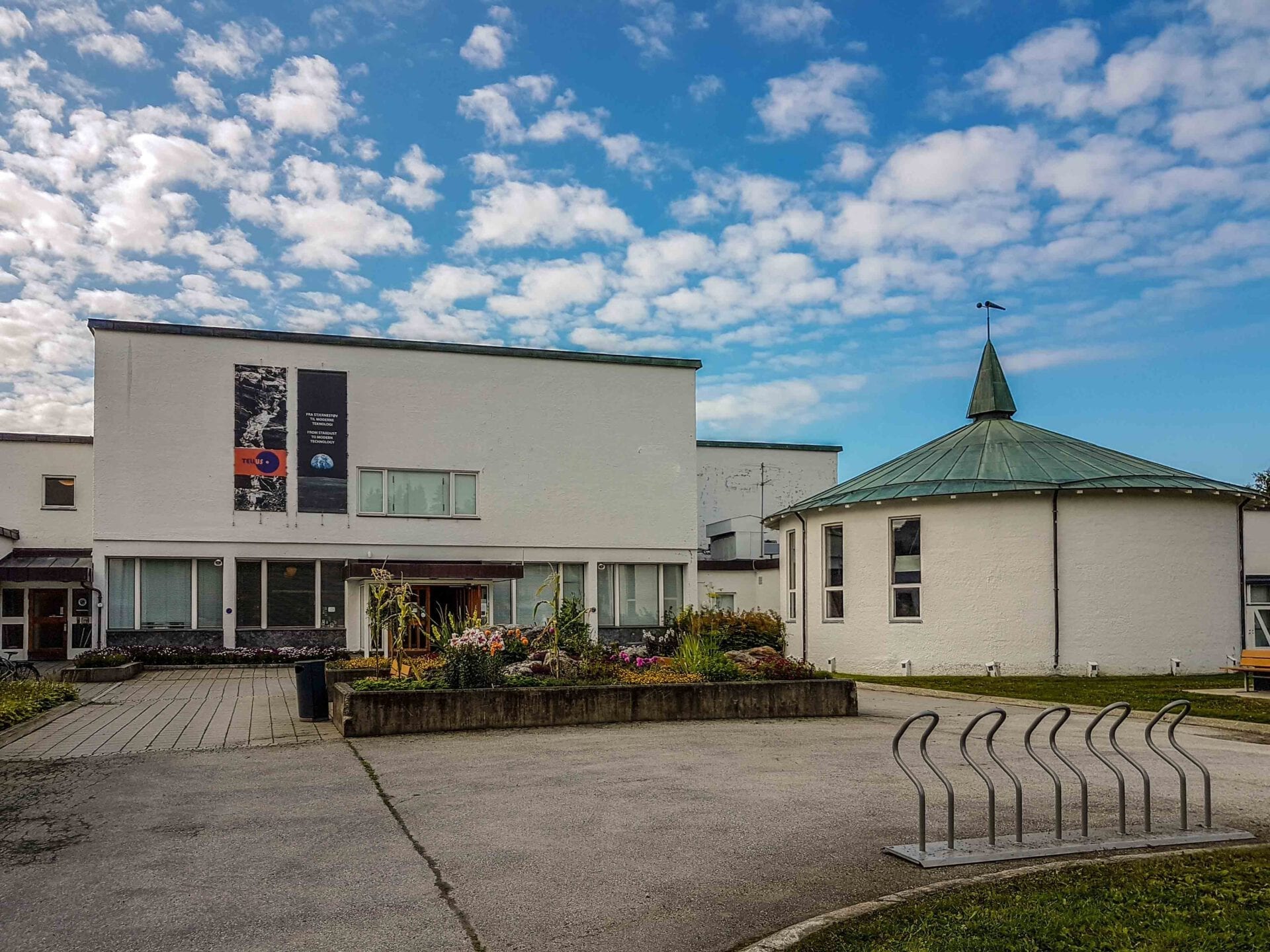
    From a scientific standpoint, the most reliable way to predict the future is by examining the past. Geological remnants help us to paint a picture of evolutionary processes that we are only beginning to understand, and many of these are on display as part of a new, permanent exhibition aimed at school-aged children at the Tromsø Museum called ‘TellUs – from stardust to modern technology.’ Evolution, in terms of ice sheet migration and its potential effect on climate change, is also a big theme at the Center for Arctic Gas Hydrate, Environment and Climate (CAGE) at UiT The Arctic University of Norway. The center is featured in the TellUs exhibition as part of the ‘modern technology’ portion of the story.

    A journey through time

    The TellUs exhibition leads the viewer on a journey that begins with the Earth as a ball of fire some 4,540 million years ago. This unimaginable expanse of time is brought into perspective by a 2.3-meter stack of A4 paper, using various colors to represent different periods of development in the Earth’s lifespan.

    This stack is made up of 22,700 sheets of paper, depicting the lifespan of the Earth. Shockingly, only the final sheet of paper represents modern human existence.

    Other abstract concepts in geological history are made relatable by presenting them in a local context, while encouraging physical interaction with various touchscreens, rocks, fossils, minerals, and models. This is done especially well through several exhibits covering geological processes amongst the four most prominent mountain peaks of the Tromsø area: Store Blåmannen, Soltindan, Tromsdalstind, and Bentsjordtind.

    CAGE research highlighted

    Research performed at CAGE regarding Arctic gas hydrates becomes a major focus in the exhibit as we enter present day in the timeline. A gas hydrate is essentially methane ice, a solid form of a potent greenhouse gas. These crystalline structures are found in and under the seabed in the Arctic. They are stable in cold conditions and under high pressure, such as under the frigid Arctic ocean. Ice sheets in areas such as Greenland and west Antarctica help to keep the gas hydrates stable. But as these ice sheets begin to melt and recede at a much quicker rate, there is a growing concern that large quantities of methane gas could be destabilized and released abruptly.

    Quantities of methane gas in the atmosphere have greatly escalated on a global scale in the recent past, with 70% of the increase credited to industrial and agricultural expansion. However, natural sources of methane – which is a greenhouse gas with 30x the power of CO2 – are still to be better understood.

    Fortunately, scientists have discovered that an abrupt release of methane happened about 12000 years ago, as evidenced by giant craters found in the ocean floor offshore Svalbard and on land in the Siberian permafrost. By studying the evolution of ice sheet dynamics of the past as well as current conditions at gas hydrate and crater sites, scientists hope to understand how rapid climate change will effect these huge stores of methane.

    A digital experience

    There are several items to investigate at the CAGE part of the exhibition, most of them delivered visually. These include two explainer videos summarizing the risks and scale of the methane problem, a video featuring remotely operated vehicle (ROV) footage from a research expedition to the Barents Sea, and 10 additional videos of CAGE scientists explaining various elements of this important research. Also in place is an unusually well-preserved methane chimney carefully delivered to the museum from Italy.

    The screen on the left contains interviews and videos created by CAGE scientists, while the stone pipe in the middle is an unusually well-preserved methane chimney originating from Italy.

    The topics available on the screen are as follows:

    CAGE: Gas hydrate Research (menu)

    Big plans for The Arctic University Museum of Norway

    Throughout most of its history, The Arctic University Museum of Norway (formerly Tromsø Museum) has featured a geological exhibition, initially due to the influence of famous geologist and co-founder Karl Pettersen.  The exhibition preceding TellUs was erected in the late 70s and faced renovations several times until 2014, when it was entirely dismantled to make room for the new exhibit.

    In 2016, plans for a new building to house the museum were approved. The project is expected to be finished in 2025 and will include a 19,700 square meter museum in immediate proximity to Tromsø city center.

  • Gas hydrate workshop brings together early-career researchers with international experts

    Gas hydrate workshop brings together early-career researchers with international experts

    Workshop focuses on knowledge-sharing and collaboration

    The Sedimentary Gas Hydrate Workshop, held in Tromsø from March 26th-March 28th 2019, was hosted by the Arctic Marine Geology and Geophysics Research School (AMGG), Centre for Arctic Gas Hydrates (CAGE), UiT The Arctic University of Norway (UiT), the Petroleum Research School of Norway (NFiP) and the University of Bergen (UiB). The aim of the gathering was to share knowledge on gas hydrates and facilitate an opportunity for networking across institutions.  The workshop application process was highly competitive, resulting in 24 participants originating primarily from UiT, UiB and NTNU, with a few attendees from organizations such as Equinor (formerly Statoil) and UNIS. The workshop even drew a handful of international participants from both Europe and the US.

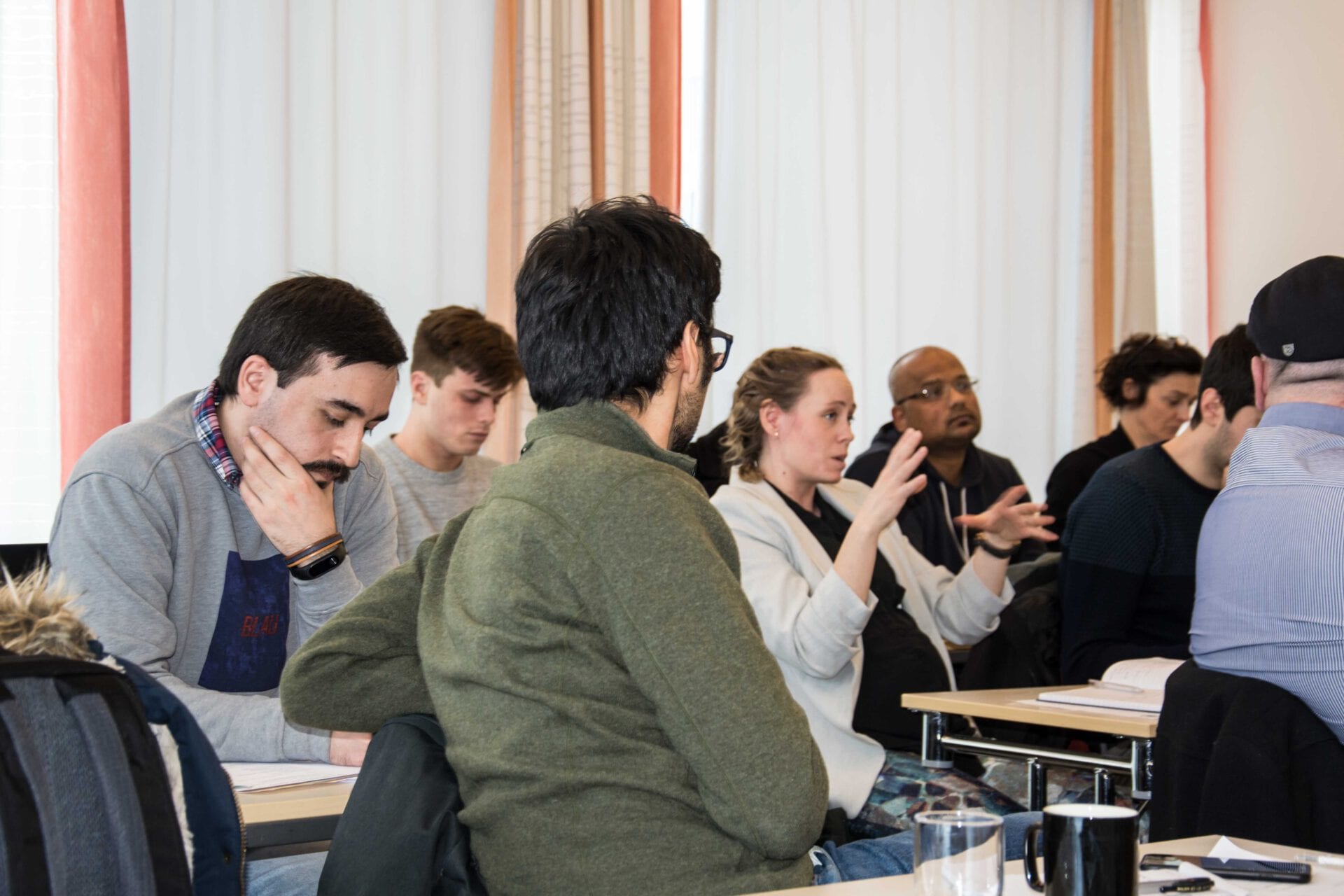
    An international group of PhD students attended March’s gas hydrate workshop

    US Geological Survey’s William Waite provides fascinating perspectives

    Presentations were given by both expert researchers in gas hydrates as well as PhD students just beginning their careers. We were especially excited to welcome distinguished expert William Waite from the U.S. Geological Survey. He is the leader of the Gas Hydrate Project’s Laboratory Program and co-author of over 30 papers on gas hydrates and geophysics. At the workshop he gave several lectures on gas hydrates, ranging from finding them in nature, to quantifying the size of the hydrate, to harvesting methane.

    william-waite-workshop-march2019
    William Waite, international expert on gas hydrates, traveled all the way from the US to participate in the workshop.

    New connections, new opportunities

    There were also plenty of chances to network at the Tromsø workshop. Participants were invited to bring posters to facilitate discussion on their research, and dedicated sessions were planned for working together on new ideas and seeking opportunities for collaboration. And there were, of course, many productive coffee breaks as well as a delightful networking dinner.

    AMGG, CAGE, UiT, NFIP and UiB thank all of the attendees for their participation and look forward to future interactions!

    Text: Jessica Green

    Photos: Jessica Green & Giuliana Panieri

  • Workshop: scientific drilling in the Fram Strait

    Workshop: scientific drilling in the Fram Strait

    CAGE is arranging a MagellanPlus workshop in June, to develop a comprehensive proposal for International Ocean Discovery Program. The aim will be a scientific drilling expedition to the Fram Strait.

    Text: Maja Sojtaric

    (more…)

  • Welcome to the GIMS13 conference in Tromsø

    Welcome to the GIMS13 conference in Tromsø

    CAGE is proud to host the 13th conference on Gas in Marine Sediments in Tromsø, the Gateway to the Arctic. You can now register and submit abstracts for the conference that will take place 19-22 September 2016.

    Text: Maja Sojtaric

    (more…)

  • CAGE contributes to Gordon Conference

    CAGE contributes to Gordon Conference

    Gordon Research Conferences are a group of prestigious international scientific conferences covering frontier research in a range of topics. CAGE is one of the contributors for the 2016 conference on natural gas hydrate systems to be held in Galveston, Texas.

    Text: Maja Sojtaric

    (more…)

  • Visit from our Advisory Board

    Visit from our Advisory Board

    Advisory Board for CAGE is composed by accomplished international scientists. Yesterday three of them visited the centre for an update on our recent activities.

    (more…)

  • Panieri giving talk at The Niels Bohr Institute

    Panieri giving talk at The Niels Bohr Institute

    Associate Professor Giuliana Panieri has been invited to the internationally acclaimed research institution, Niels Bohr Institute,  to give a talk about tracking past methane emissions.

    Text: Maja Sojtaric

    (more…)

  • CAGE elected to host international conference

    CAGE elected to host international conference

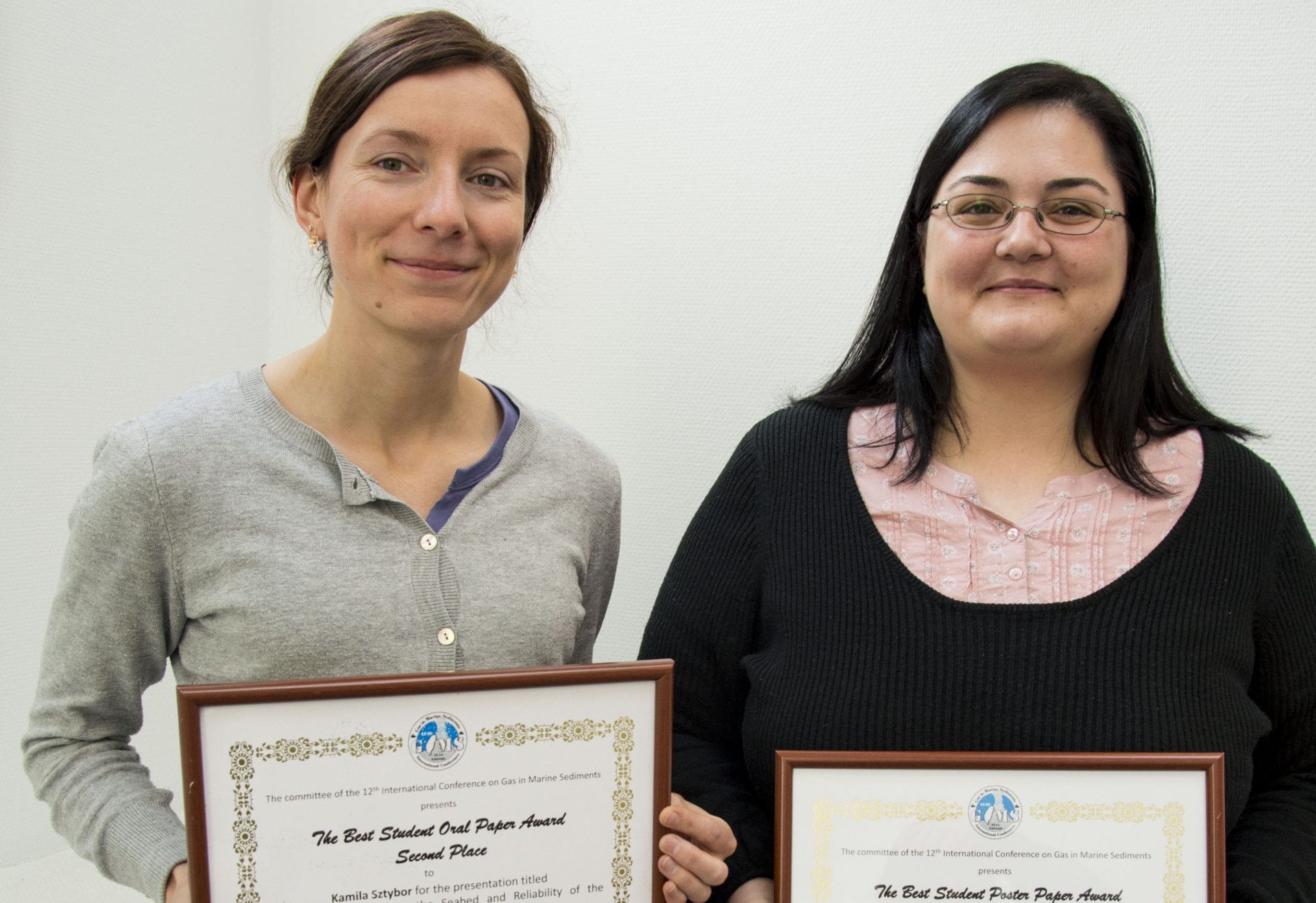
    This years conference on gas in marine sediments (GIMS12) in Taiwan was successful for two CAGE-students who won awards for their effort. Next conference will be held in 2016 and organised by CAGE in Tromsø. 

    Text: Maja Sojtaric

    (more…)

  • Members of Norwegian Parliament visit CAGE

    Members of Norwegian Parliament visit CAGE

    Several members of the Norwegian Parliament attended a local government conference in Tromsø this weekend. They took the opportunity to visit CAGE .

    Text and photo: Maja Sojtaric


    (more…)

  • Natural Gas Hydrate Systems Gordon Research Conference

    Natural Gas Hydrate Systems Gordon Research Conference

    Natural Gas Hydrate Systems Gordon Research Conference was held on March 23-28, 2014 in Galveston, Texas.

    The focus of the meeting was current major topics in hydrate systems including earth science and engineering aspects of methane hydrate production, hydrates in and under marine systems and permafrost including potential roles in paleo- and modern climate change, and hydrates in engineered systems such as pipelines.

    From CAGE participated: Jürgen Mienert, Giuliana Panieri, Karin Andreassen, Bénédicte Ferré, Michael Carroll and Joel Johnson.

  • CAGE is officially opened

    CAGE is officially opened

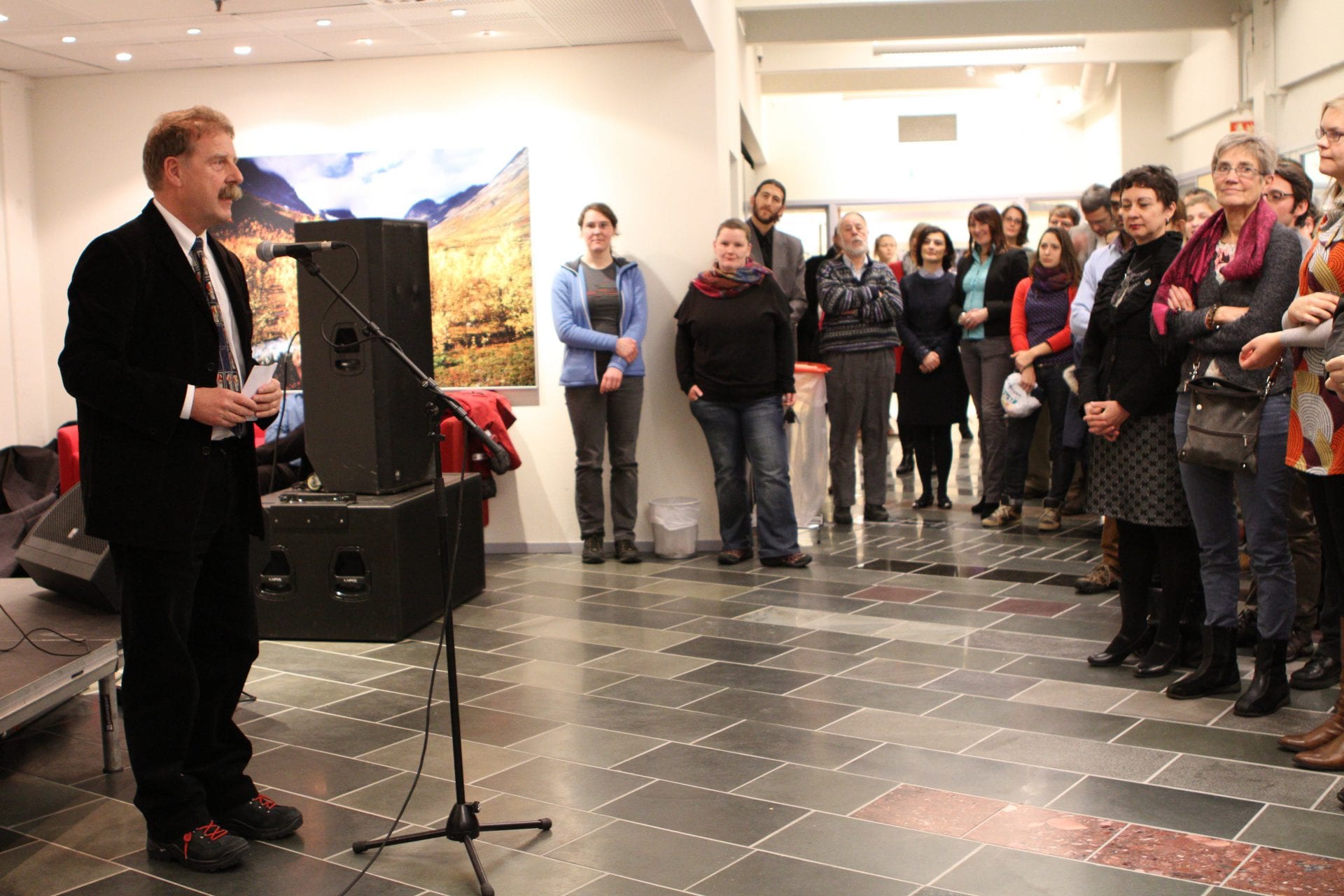
    CAGE was officially opened on Friday November 22.

    The official Norwegian Centre of Excellence plaque was presented to Centre Director Jürgen Mienert from Senior Adviser Liv Furuberg from The Research Council of Norway.

    “The CAGE projects are high quality, exciting and beneficial from a societal perspective. This centre also has an excellent timing and an excellent geographical location”, said Furuberg.

    These are some of the reasons why CAGE was given the Centre of Excellence title, after a long and severe competition where 139 research centres participated.

    – A big day

    Researchers, students, representatives from the industry and others showed up to celebrate CAGE . The director himself described the opening as a great day for UiT The Arctic University of Norway and for Tromsø – the ‘arctic capital’.

    “A Centre of Excellence is now opened, with an extensive budget over ten years and more than 40 employees. CAGE will be a national and international centre of gravity for arctic research”, he said in his speech for the day .

    CAGE is one of thirteen new Norwegian Centres of Excellence (CoE ) opening this year. There are great expectations for how the centre will contribute to climate research.

    “Remember that the world’s leading scientists took 20 years to find out that El Niño in the Pacific Ocean affect the climate system in the northern hemisphere . We have ten years to understand the effect arctic gas hydrates have on the environment and climate in the north. We will use this time to build a world-class international research centre”, said Jürgen Mienert.

    CAGE brings the world to Tromsø

    UiT’s rectorate was present at the opening , and Rector Anne Husebekk expressed both pride and great expectations for university’s third Centre of Excellence .

    Pro-Rector for Research and Development Kenneth Ruud believes that this centre is a result of the Department of Geology and Faculty of Science and Technology ‘s systematic quality work .

    – A Centre of Excellence is a great achievement that offers huge opportunities, puts the academic community and Tromsø on the map, and allows you to recruit the best researchers in the world . It is also a motivation for the world to come to Tromsø, stated Ruud.

    Gold medal

    Dean Morten Hald at the Faculty of Science and Technology, UiT, said that to succeed in the Norwegian Centres of Excellence competition is like winning a gold medal.

    – I feel sure that CAGE will have a generous and inclusive role as a leading research centre , he said.

    Department Director Jan Cramer greeted from CAGE partner The Geological Survey of Norway (NGU).

    – The Department of Geology has for many years provided good research and should be considered as a flagship for UiT. It was therefore no surprise when CAGE got the Centre of Excellence title – it was a correct and timely decision, said Cramer .

    Jarle Husebø from Statoil, former NASA employee Eric Kort from the University of Michigan and Alina Stadnitskaia from the Royal Netherlands Institute contributed with popular science presentations on energy, climate and environment. The Tromsø based electronica duo Frost performed at the opening.

    See what the media wrote about the opening

    Click on the images to enlarge: